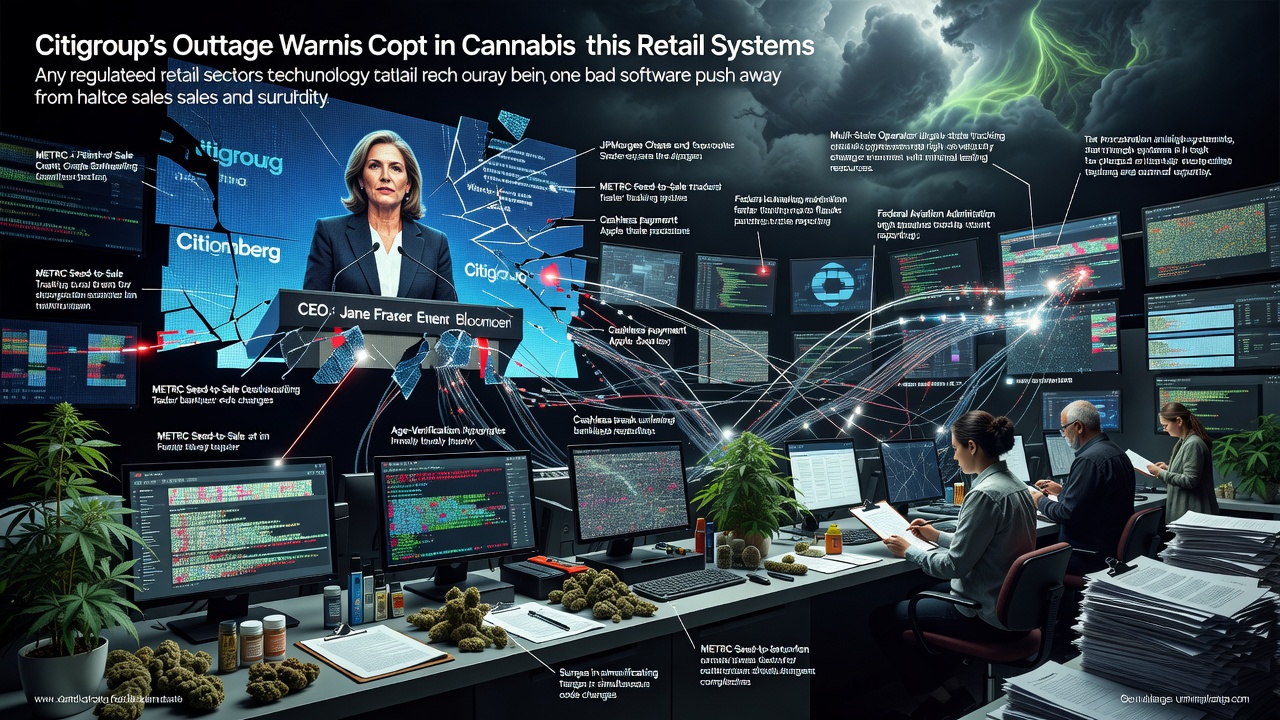
Citigroup CEO Jane Fraser's warning about rising technology outages wasn't aimed at cannabis retailers. But the mechanics she described - a surge in simultaneous system changes, AI tools surfacing software flaws faster than teams can safely patch them, one update rippling into unrelated services - describe a risk pattern that dispensary operators and the vendors who serve them should recognize immediately.
Fraser told a Bloomberg event in Washington that companies are now pushing through five to ten times as many system changes at once compared with what she'd seen previously. Recent outages at JPMorgan Chase, Apple and the Federal Aviation Administration, unconnected as they may be, point to the same underlying pressure: more code moving faster, with less room to catch what breaks before it reaches customers.
Why This Matters for Seed-to-Sale and POS Systems
Cannabis retail runs on a tighter, more fragile technology stack than most people outside the industry appreciate. A single transaction at the counter touches point-of-sale software, state seed-to-sale tracking like METRC, payment processing, inventory management and often a loyalty or age-verification layer - all stitched together, often by different vendors, under compliance deadlines that don't bend for a bad software push.
When one of those systems goes down, the consequences aren't abstract. A METRC outage or a POS failure can halt sales entirely, since licensed operators are generally required to log transactions in real time to stay compliant. Budroom inventory counts stop reconciling. Compliance logs fall behind. Store managers end up improvising manual workarounds that create their own audit exposure later.
The Compliance Exposure Behind Every Patch
Here's the catch regulators in any heavily monitored industry eventually arrive at: a vendor's internal software update is still the operator's compliance problem. If a seed-to-sale platform pushes a fix that temporarily breaks reporting, the licensed dispensary - not the software company - is the one answering to state cannabis regulators about gaps in the compliance record.
That asymmetry is worth sitting with. Multi-state operators juggling different state tracking systems, tax reporting requirements and payment processors are, in effect, running the same high-change-velocity environment Fraser described at Citigroup, except with fewer resources to test updates before they go live and a regulatory environment with less tolerance for downtime excuses.
Cashless payment systems in cannabis - already operating in a gray zone shaped by federal banking restrictions - add another layer of fragility. Outages there don't just inconvenience a customer; they can interrupt the narrow, carefully built financial rails that keep a plant-touching business banked at all.
What Operators and Vendors Should Take From It
None of this means dispensaries should resist software updates. Patches that close security gaps or fix compliance bugs are necessary, and AI-assisted vulnerability detection is, on balance, a genuine improvement in catching problems before bad actors do. The lesson is about sequencing and preparedness, not resistance to change.
- Operators should ask POS and seed-to-sale vendors how changes are tested before deployment, not after.
- Store-level contingency plans - manual transaction logs, offline compliance procedures - matter more as system complexity grows.
- Payment providers serving cannabis clients carry outsized reputational risk; a processing outage in this sector draws regulatory attention faster than in conventional retail.
- Repeated outages, as Fraser's banking comparison suggests, tend to invite closer regulatory scrutiny of how companies manage change, not less.
In practice, the real takeaway isn't about banking at all. It's that any regulated retail sector leaning on interconnected, vendor-dependent technology - cannabis very much included - is one bad update away from a compliance headache nobody budgeted for.