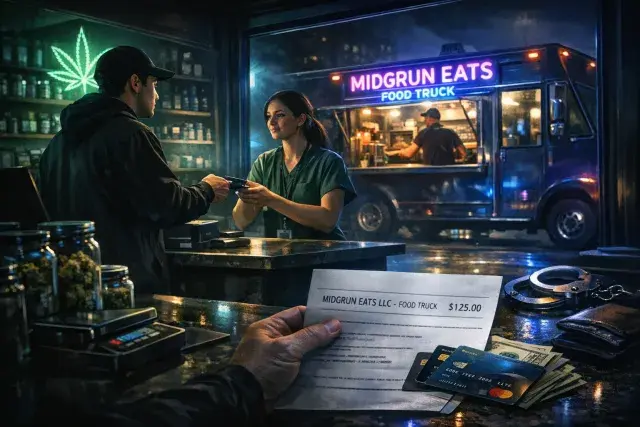
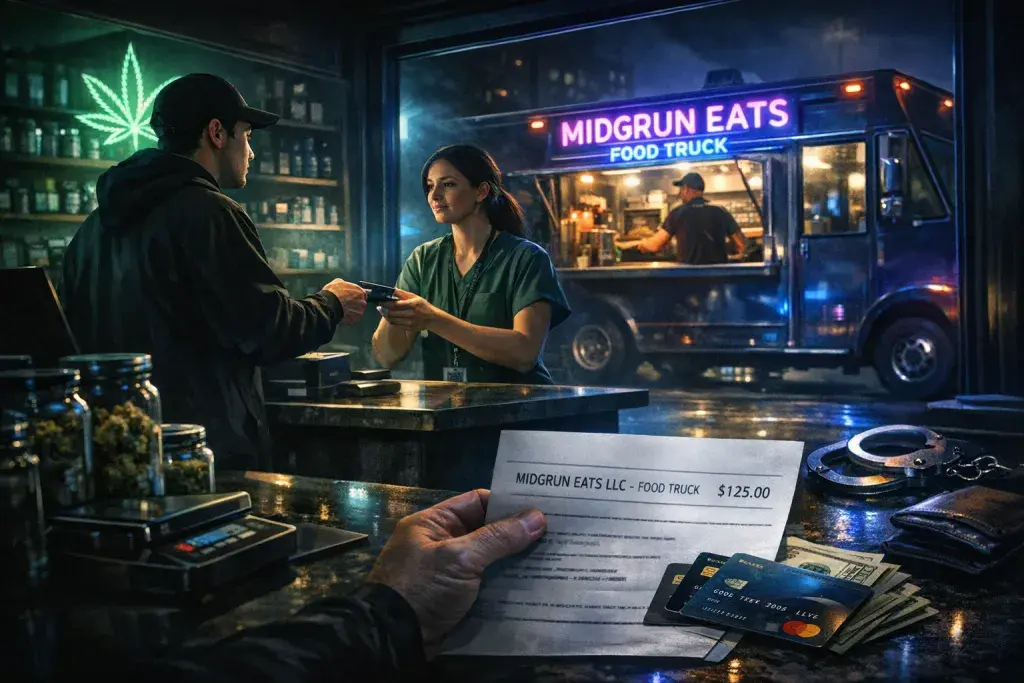
A Midtown marijuana dispensary called Blüm accepts credit cards, but customer statements list purchases under the name "Midgrun Eats LLC food truck." This disguise allows the business to bypass federal banking restrictions that force most cannabis retailers to operate on cash alone. Experts describe the tactic as a risky workaround that boosts convenience and sales in an industry starved for payment options.
A Workaround for Federal Barriers
Marijuana remains a Schedule I substance under federal law, equivalent to heroin, which prevents federally insured banks from handling related transactions. Credit cards, processed through these banks, stay off-limits for most dispensaries, leaving them reliant on cash, ATMs, or debit cards via third-party systems. Blüm sidesteps this by rebranding transactions as food truck sales, a method confirmed across its six Nevada and California locations.
Competitive Edge in a Cash-Only Market
In Washoe County, Blüm stands alone among dispensaries in accepting credit cards, according to checks at other local outlets. Jeremy Skaff, vice president of sales at Journey Business Solutions, notes that expanded payment choices draw more customers in a cash-averse era. Will Adler, a cannabis advocate with Silver State Government Relations, calls it a clear advantage, as shoppers earn points and avoid carrying bills.
Legal Risks and Money Laundering Concerns
Banking attorney Candace Carlyon warns that misrepresenting cannabis sales as food truck revenue treads a fine line between necessity and felony. Federal law treats marijuana sales as crimes, and disguising proceeds risks separate money laundering charges under the Money Laundering Control Act. The U.S. Attorney's Office in Nevada, led by Nicholas Trutanich, neither confirms nor denies scrutiny of Blüm, while state tax rules impose no credit card bans.
Industry Patterns and Safer Alternatives
Blüm, owned by California-based Terra Tech, joins others testing credit card models, though Skaff advises against it as a consultant to cannabis firms. He promotes debit cards, ATMs, and gift cards as low-risk paths that avoid bank backing. Credit unions, lacking federal insurance, increasingly serve the sector—reaching 633 institutions by early this year per Treasury data analysis—yet waits stretch months, pushing some to improvised fixes. Customers face minimal dispute risk from such purchases.