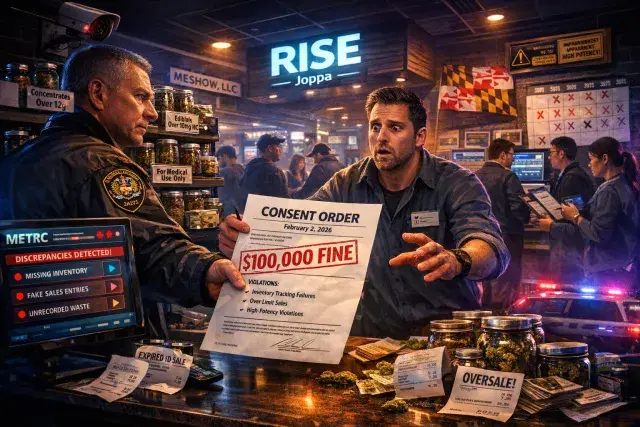
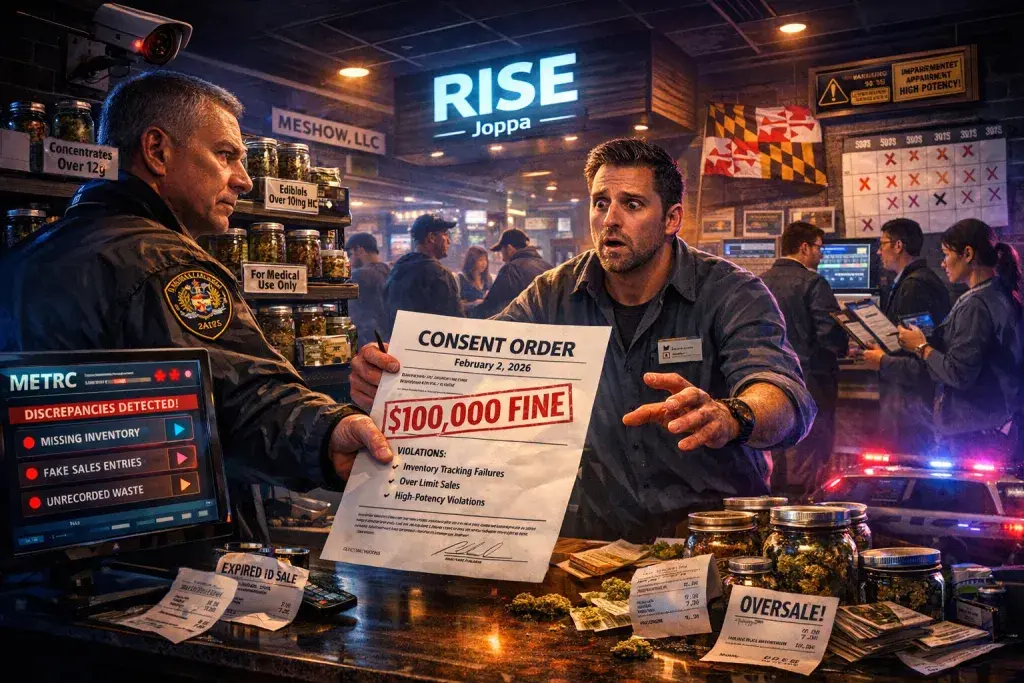
In a stern enforcement move, the Maryland Cannabis Administration has fined MESHOW, LLC—operating as RISE Joppa—$100,000 through a February 2, 2026, Consent Order. This action caps investigations from inspections between October 2024 and November 2025 at the Joppa dispensary, spotlighting failures in inventory tracking, sales limits, and high-potency controls. It underscores the state's push for rigorous oversight in its booming adult-use market, launched in 2023, to safeguard public health and prevent diversion.
Persistent Violations in Sales and Potency Rules
Inspectors repeatedly caught RISE Joppa exceeding Maryland's adult-use limits, such as selling over 12 grams of concentrates daily and oversales of infused edibles. More critically, the dispensary sold high-potency edibles—over 10mg THC per serving or 100mg per package—to recreational buyers, products reserved for medical patients. Sales to those with expired certifications compounded the issues, risking unsafe consumption patterns in a market where high-THC products drive 40% of sales but heighten impairment risks.
- Oversales of concentrates and edibles across multiple visits
- High-potency edibles improperly dispensed to non-medical users
- Sales to patients lacking current provider certifications
Inventory Manipulation and Tracking Failures
The gravest lapses involved METRC, Maryland's seed-to-sale system. In October 2024, discrepancies showed products in the database absent from shelves; instead of mandated reporting, a former general manager allegedly ordered "fake purchases"—simulated transactions without product or payment—to balance books. Video evidence confirmed this evasion. Green waste adjustments also lacked documentation, breaching SOPs. Such practices erode trust in tracking, vital for curbing black-market diversion amid Maryland's $1.2 billion annual cannabis sales.
- Fake transactions to reconcile inventory without reporting
- Undocumented green waste and recordkeeping gaps
- Delayed notification of manager terminations
Remedies and Industry-Wide Lessons
Beyond the fine, the Consent Order mandates sweeping fixes: METRC training for all staff, 18 months of third-party audits, new compliance software, and revised SOPs. Repeat offenses could trigger suspensions. RISE Joppa blamed POS-METRC glitches but has added safeguards like potency warnings. This case reflects broader challenges in Maryland's young recreational sector, where rapid scaling strains compliance. Nationally, similar fines—totaling millions yearly—highlight how poor tracking fuels potency creep and youth access risks, pushing for AI-enhanced systems and stricter agent vetting to mature the industry responsibly.