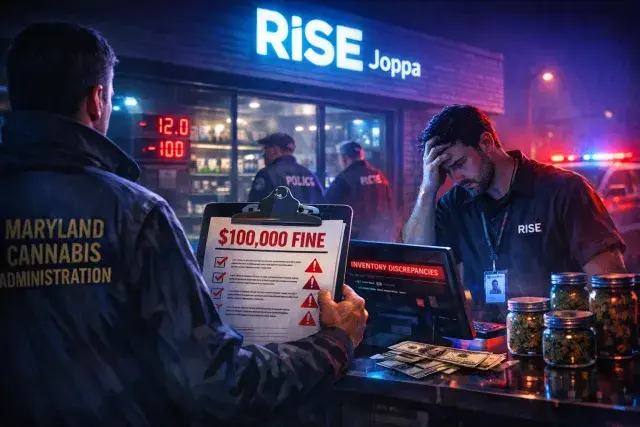
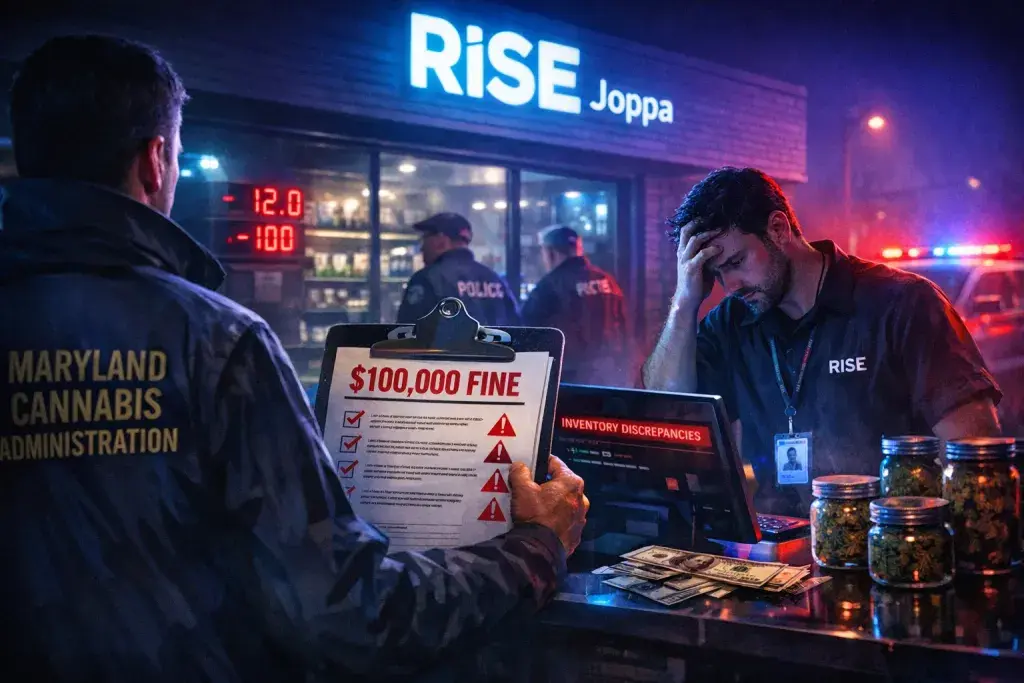
The Maryland Cannabis Administration has imposed a $100,000 civil penalty on MESHOW, LLC, operating as RISE Joppa, after inspections revealed persistent failures in tracking inventory, respecting sales limits, and controlling high-potency products. This enforcement, detailed in a February 2, 2026, Consent Order, addresses violations uncovered from October 2024 through November 2025 at the Joppa dispensary. The action underscores regulators' push to enforce strict compliance in Maryland's recreational cannabis market, launched in 2023, where accurate tracking prevents diversion and protects public safety.
Oversales and High-Potency Product Breaches
Inspectors documented multiple cases of adult-use sales exceeding state limits, including more than 12 grams of concentrated cannabis in single days and repeated oversales of concentrates and infused edibles. Regulators also found high-potency edibles—those surpassing 10 milligrams of THC per serving or 100 milligrams per package—sold to recreational customers, a category reserved for medical patients and caregivers. Sales to medical patients with expired provider certifications compounded these issues, highlighting gaps in customer verification processes that Maryland law mandates to curb overconsumption risks.
Inventory Manipulation and Tracking Failures
A standout violation emerged during an October 2024 inspection: products listed in the METRC seed-to-sale system were absent from physical stock. Instead of reporting discrepancies as required, the then-general manager instructed staff to process "fake purchases" to balance records, confirmed by video showing no product or payment exchanged. While no theft or diversion occurred, this bypassed mandatory protocols designed to maintain a verifiable chain of custody from cultivation to sale, a cornerstone of legal cannabis regulation nationwide.
Persistent Issues and Corrective Mandates
Follow-up checks in April, August, and November 2025 exposed ongoing oversales and expired certification sales, even after an approved corrective plan. The dispensary blamed some errors on point-of-sale software glitches with METRC but has since added checks, prompts, and redundancies. The Consent Order demands METRC training for all staff within 45 days, monthly third-party audits for 18 months, new compliance software in 30 days, full inventory reconciliation, and revised procedures—plus warnings of probation or closure for repeats within 18 months. These steps reflect broader challenges in Maryland's young market, where rapid growth strains compliance amid evolving technology integrations.