CBD gummies have become the default entry point for consumers curious about hemp-derived cannabinoids, and that popularity has pulled in a flood of brands competing on flavor, potency and price. But the category remains loosely policed at the federal level, which means the gap between what a label claims and what a lab finds can be wide. That gap is exactly why independent testing matters more than marketing copy.
Why Lab Testing Changes the Calculus
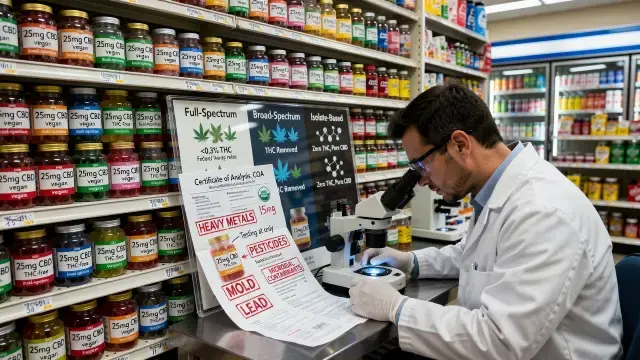
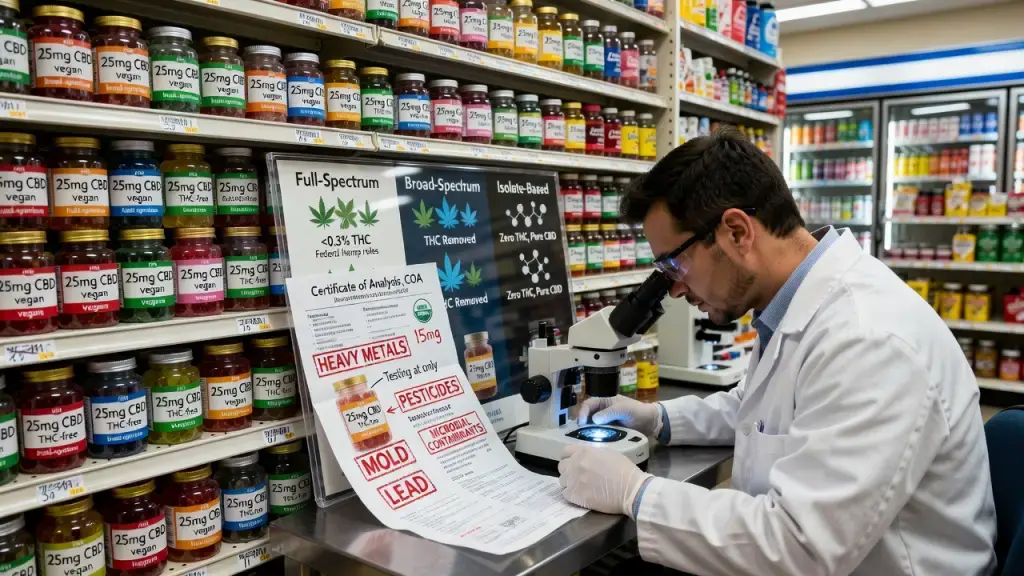
CBD sits in a regulatory gray zone. The FDA has not established a formal framework for hemp-derived CBD in food products, so oversight largely falls to state agencies and whatever testing a brand voluntarily commissions. That's the catch: a company can print "lab tested" on packaging without ever disclosing a full certificate of analysis (COA), and a COA that only screens for cannabinoid content - without checking for lead, pesticides or mold - tells a buyer very little about actual safety.
Independent testing that checks for heavy metals, microbial contaminants and pesticide residue, alongside accurate potency, gives a far more complete picture. A product that claims 25 milligrams of CBD per gummy but tests at 15 milligrams isn't just a labeling nuisance; it's a compliance problem that would draw scrutiny in a regulated dispensary setting and should draw the same scrutiny from consumers buying online or at retail.
Full-Spectrum, Broad-Spectrum and THC-Free: What the Terms Actually Mean
Not all CBD gummies are built the same way, and the distinction matters for anyone concerned about THC exposure, drug testing or state-level legal limits.
- Full-spectrum products contain the full range of hemp-derived cannabinoids, including trace THC, typically capped at 0.3% by dry weight under federal hemp rules.
- Broad-spectrum products retain multiple cannabinoids but are processed to remove detectable THC, though trace amounts can still occur depending on manufacturing controls.
- Isolate-based gummies contain only CBD, with no other cannabinoids present by design.
For consumers managing employment drug screening or state travel considerations, that distinction is not a technicality - it's the whole reason to read a COA rather than a front-of-package claim.
Price, Ingredients and the Trade-Offs Buyers Actually Face
Price per serving varies widely across the category, and higher cost doesn't automatically track with higher quality. Some brands differentiate through USDA-certified organic sourcing, vegan formulations or distinctive ingredient combinations; others compete purely on potency per gummy or membership-based discount pricing. None of that substitutes for verified lab results.
In practice, the sturdiest way to evaluate a CBD gummy brand is to weigh four factors together: price, independent lab results, ingredient quality and flavor - in that order of importance. A product that scores well on taste but fails a contamination screen isn't a bargain at any price point.
What This Means for Retailers and Regulators
For dispensary operators and hemp retailers carrying CBD gummies alongside THC products, the compliance stakes are real. Shelf space given to a brand without a verifiable, contaminant-inclusive COA creates liability exposure and undercuts consumer trust - the same trust state regulators are trying to build through mandatory seed-to-sale tracking and batch testing in adult-use and medical channels. As hemp-derived CBD continues to sell through gas stations, wellness shops and general retail with far less oversight than licensed cannabis dispensaries, the disparity in testing standards remains one of the category's most pressing unresolved issues.