
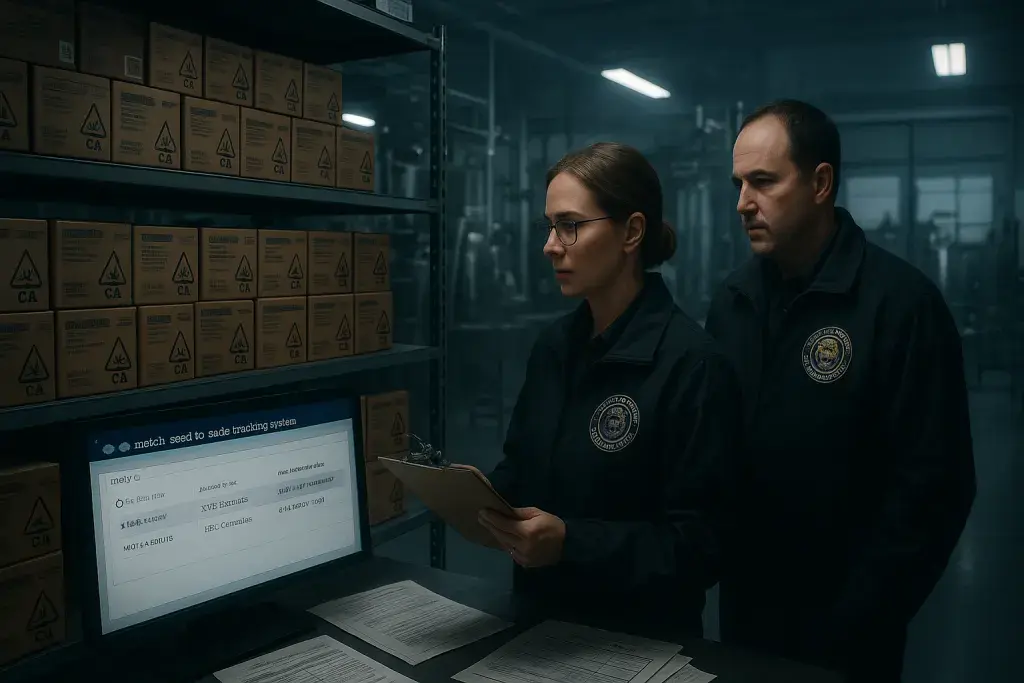
A Michigan cannabis processor is facing potential license suspension and significant fines after state inspectors discovered more than 12,000 individual cannabis products at its Harrison Township facility with no Metrc tags, no identifying information - and some in California-specific packaging. The Michigan Cannabis Regulatory Agency filed a formal complaint against VJAS 1, outlining what amounts to one of the more brazen seed-to-sale tracking failures to surface in the state's licensed market. The case raises hard questions about inventory accountability, supply chain integrity, and what happens when the paper trail simply doesn't exist.
Seed-to-sale tracking systems like Metrc exist precisely to prevent this kind of situation. Every compliant cannabis product moving through a licensed supply chain - from cultivation through processing to retail - is supposed to carry a unique tag that lets regulators trace it back to its origin. Operators investing in infrastructure such as a cannabis dispensary pos system new york understand that Metrc integration isn't optional window dressing; it's the connective tissue between a licensee and its regulator. When those tags are absent at the processor level, the entire downstream chain loses its evidentiary foundation.
What makes the VJAS 1 case particularly striking isn't just the volume of untagged product - it's the presence of items in California-specific packaging, bearing "CA" labeling and California-mandated warning language. That's not an inventory bookkeeping error. Compliant packaging in a regulated state is jurisdiction-specific by design: warning text, THC disclosure formats, and child-resistant requirements differ state to state. Finding California-coded packaging inside a Michigan processing facility suggests product may have entered Michigan's licensed supply chain from outside it entirely - which, if confirmed, would represent a fundamental violation of the state's market rules, not merely a recordkeeping lapse.
The Metrc Problem Runs Deeper Than Missing Tags
Investigators did find some products with valid Metrc tags at the facility. Here's the catch: cross-referencing those tags in the state system revealed they were assigned to inventory that was supposed to be located at other licensed cannabis businesses entirely. That is a separate and serious problem. It means product with legitimate-looking documentation was either diverted from another licensee's tracked inventory or that tag data had been manipulated - neither of which is a minor compliance gap. It also signals that whatever controls VJAS 1 had in place weren't catching discrepancies between physical inventory and what the state tracking system reflected.
When inspectors asked facility employees to explain the discrepancies, they couldn't. That detail matters operationally. A well-run processing facility maintains inventory logs, batch records, transfer manifests, and Metrc entries that any trained staff member should be able to reconcile on demand. The inability to explain how more than 12,000 untagged products came to be on-site - or where they originated - suggests either a systemic failure in internal controls or something regulators tend to view far less charitably: deliberate concealment.
Licensing Exposure and What This Means for Michigan Operators
VJAS 1 now faces a range of enforcement outcomes: fines, license suspension, restriction, revocation, or refusal to renew. In Michigan's regulated adult-use market, license revocation is effectively a business death sentence - the facility closes, assets tied to the license lose their value, and any associated investor relationships become complicated fast. Suspension pending investigation is painful enough; it halts production, disrupts wholesale supply agreements, and can trigger contract default clauses with retail partners relying on that processor's SKUs.
For other Michigan licensees watching this case, the operational lesson is straightforward. Metrc compliance isn't a back-office task that can be delegated informally or allowed to slip during busy periods. It requires dedicated staff accountability, regular internal audits reconciling physical inventory against tracked records, and clear protocols for flagging untagged or unidentifiable product the moment it appears - not after a state inspection does. The cost of those internal controls is real. The cost of not having them, as VJAS 1 is now learning, is considerably higher.
Consumer Safety Sits at the Center of This Framework
It's worth being plain about why tracking rules carry this much regulatory weight. Products without Metrc tags have no verifiable testing history attached to them. Regulators and consumers alike have no way to confirm whether untagged products were tested for pesticides, heavy metals, residual solvents, or accurate potency - all mandatory requirements in Michigan's licensed market. Products that enter the supply chain from outside the state's testing regime bypass those consumer safety checkpoints entirely. The licensing framework, the tracking system, the packaging requirements - they all exist to create a traceable, tested, verified chain between producer and end consumer. When that chain breaks at the processor level, the downstream risk doesn't disappear; it just becomes invisible.