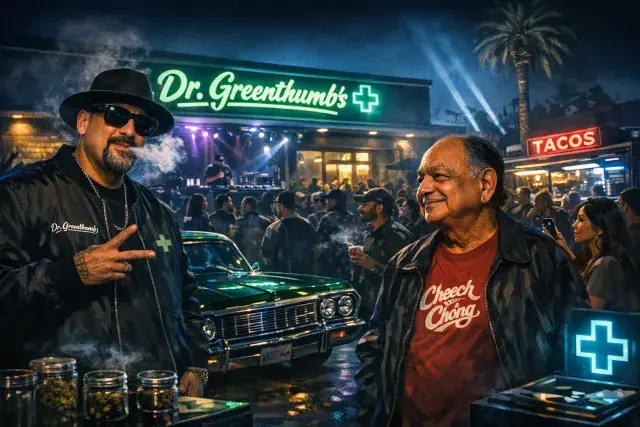
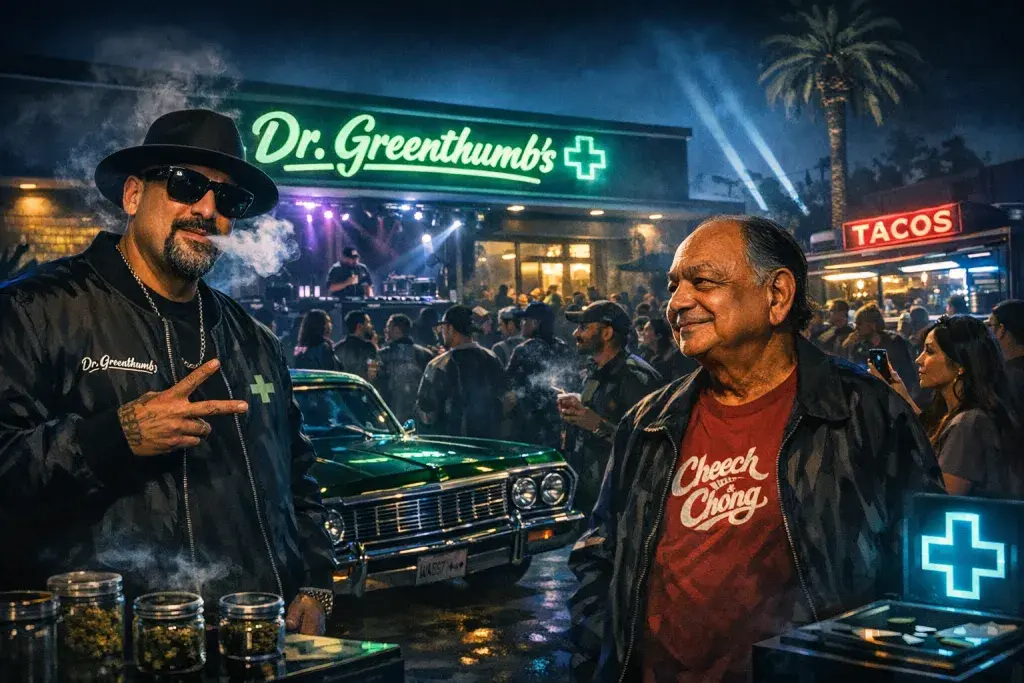
Dr. Greenthumb marked the launch of its newest cannabis dispensary in West Los Angeles on September 16 with a vibrant day-long event that drew over 700 guests. The gathering featured food trucks, live music, vintage lowrider displays, VIP gift bags, and appearances by Cypress Hill rapper B-Real and comedian Cheech Marin. This expansion underscores the brand's growing footprint in California's competitive cannabis market amid evolving consumer trends.
A Nod to Cannabis Culture Roots
Dr. Greenthumb embodies a fusion of medical cannabis access and West Coast counterculture. Founded by B-Real, the brand draws from his Cypress Hill legacy, where songs like "Hits from the Bong" normalized cannabis in hip-hop during the 1990s War on Drugs era. Cheech Marin's involvement evokes the stoner comedy archetype from films like Up in Smoke, which mainstreamed marijuana humor decades before legalization. Lowrider displays connected the event to Chicano car culture, a staple of Los Angeles street life intertwined with cannabis since the 1970s.
Expansion in California's Maturing Market
California legalized recreational cannabis in 2016, spawning a regulated industry now valued in billions annually through licensed dispensaries. Dr. Greenthumb's West LA site joins outposts in popular areas like Long Beach and Studio City, targeting urban consumers seeking premium products. Such openings reflect operators' strategies to build community loyalty through experiential events, countering competition from over 1,000 statewide retailers. Food trucks and music foster social hubs, transforming dispensaries from transactional spots into cultural venues.
Cultural Shifts and Future Horizons
Celebrity endorsements like B-Real's propel cannabis normalization, bridging music, film, and wellness communities. These events signal broader acceptance, with public perceptions shifting as states expand access for medical and recreational use. Dr. Greenthumb's approach highlights lifestyle integration, where cannabis pairs with entertainment and local traditions. As federal reform debates continue, regional expansions like this one point to sustained growth, provided operators adapt to regulatory changes and market saturation.