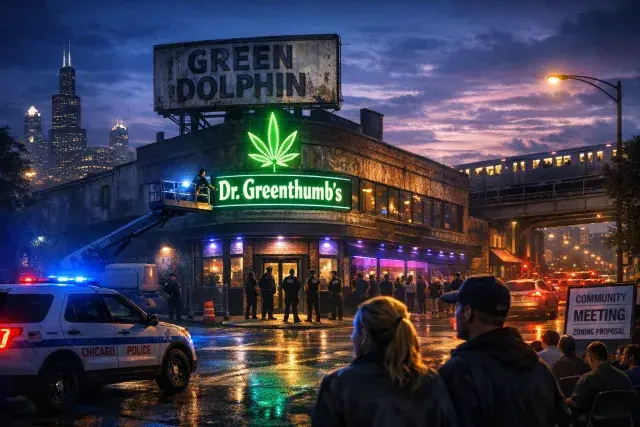
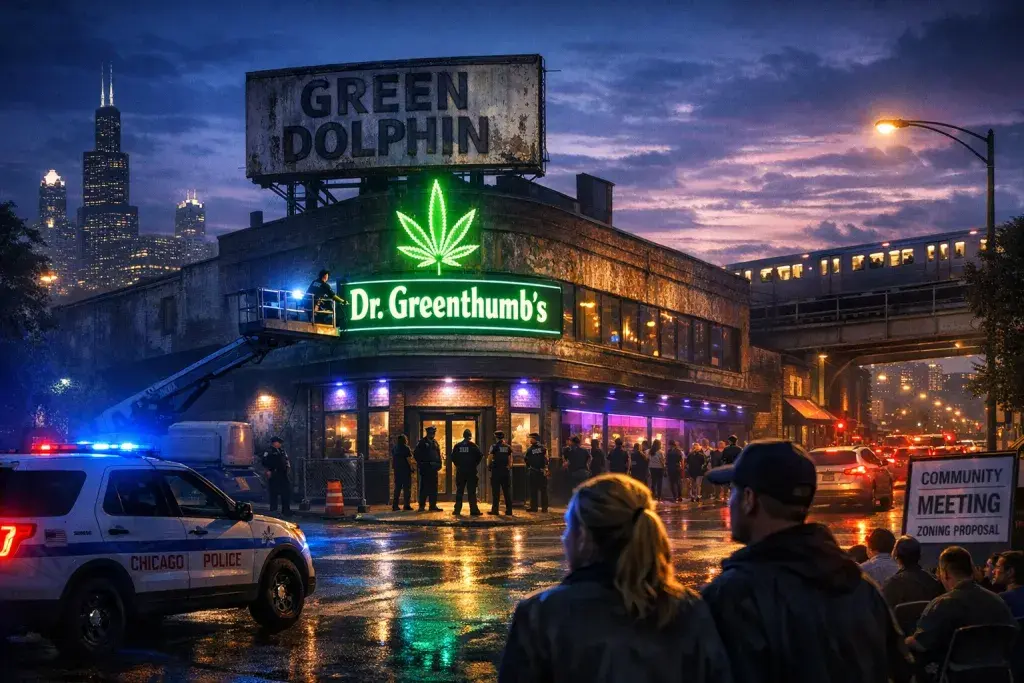
A cannabis dispensary chain plans to revive the long-vacant building of Bucktown’s notorious Green Dolphin Street nightclub, once a hotspot for violence, with extensive renovations and security upgrades. Residents from nearby Triangle Square apartments raised alarms at a community meeting about added traffic on already congested streets and a shift in the neighborhood’s identity. Ald. Scott Waguespack hosted the session to address these concerns before TRP, the operator of Dr. Greenthumb’s, presents its proposal to the Zoning Board of Appeals in February.
From Violence-Plagued Club to Abandoned Eyesore
The Green Dolphin Street at 2200 N. Ashland Ave. earned a grim legacy through repeated violence in the 2000s and 2010s, including a 2015 altercation that killed two people. After a brief reopening under a new name, authorities shut it down permanently in 2017. The structure has since deteriorated, drawing vandals and unauthorized raves that heightened local safety risks.
Waguespack emphasized securing the property as a priority. He noted that dispensaries bring city revenue but stressed the need to make the site presentable and prevent break-ins. TRP must undertake major renovations to meet state standards before opening Illinois’ first Dr. Greenthumb’s location.
Security Promises Meet Traffic and Character Worries
TRP spokeswoman Anna Mendoza outlined state-mandated security features: electronic ID scanning, no products visible at the front, and continuous patrols inside and out. She highlighted local hiring to foster community ties, arguing that employees familiar with Bucktown would improve operations.
Neighbors focused on practical impacts. Congestion clogs Webster Avenue from 3 to 6 p.m., complicating garage access at Triangle Square and contributing to accidents, especially since a nearby bridge opened. One resident called extra dispensary traffic a safety threat amid existing strains.
Neighborhood Identity Under Pressure
Residents fear dispensaries erode Bucktown’s school-centered character. Ivy Hall already operates at 1720 N. Damen Ave., and another nearby would mark a “bait and switch,” one attendee said. This reflects broader tensions in gentrifying areas where cannabis retail—legal in Illinois since 2019—clusters despite community preferences for varied commercial mixes.
Waguespack’s office promotes transparency through meetings like Wednesday’s, held for about 20 locals. TRP has not yet surveyed traffic but faces scrutiny as zoning approval looms. The outcome could signal how cities balance economic gains from cannabis against residential quality-of-life demands.