
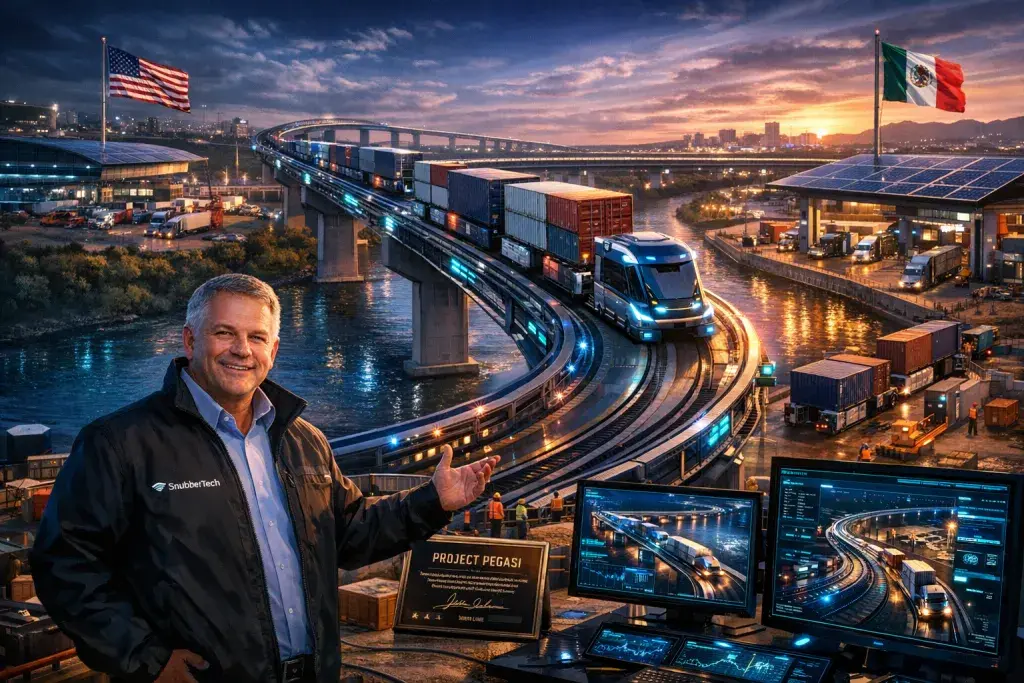
Houston-based Green Corridors is set to construct prototypes for its innovative elevated freight bridge spanning the U.S.-Mexico border in Laredo, Texas, starting within the next six months. Secured presidential approval in June, Project Pegasi aims to streamline the busiest truck crossing worldwide, slashing inefficiencies, emissions, and security risks in North American trade.
Project Details and Development Timeline
Project Pegasi features automated diesel-hybrid shuttles platooning along a dedicated guideway across the Rio Grande, with lifts for seamless container and trailer loading. CEO Mitch Carlson revealed in an exclusive interview that digital twin modeling has refined designs over three years, achieving Technology Readiness Level 4 en route to Level 7 soon.
- Prototypes for shuttles, terminals, and a 2-mile test track with S-curves to be ready by late 2026.
- Manufacturing in Texas or Nuevo Leon, Mexico; full operation enables 4-5 hour trips from Monterrey to Laredo.
- Scale: 2,500 shuttles functioning like a "conveyor belt" for steady, 24/7 flow.
Key Benefits Addressing Border Bottlenecks
Laredo handles massive truck volumes as one of four key Texas-Mexico freight routes, alongside Brownsville, Eagle Pass, and El Paso. Current operations halt at night, expose drivers to visa issues, and invite theft—problems Pegasi tackles head-on.
- Pre-U.S. scanning in Mexico for predictable logistics and minimal fraud.
- Keeps U.S. drivers north, Mexican south of the border.
- Cuts emissions via efficient platooning; operates nonstop unlike existing crossings.
Green Corridors will fund inspection facilities for U.S. Customs at no public cost, eyeing greenfield terminals in Monterrey and Laredo, plus potential truck stops.
Funding, Costs, and Future Outlook
Estimated at $6-10 billion—a moving target amid fluctuating goods prices—the venture blends debt, equity, and infrastructure funds. Backed by Carlson's Snubbertech expertise in heavy manufacturing, the project nears full Mexican permits.
This initiative could transform U.S.-Mexico trade, the backbone of North American supply chains, by boosting reliability amid rising e-commerce demands and nearshoring trends. Reduced idling trucks mean lower carbon footprints, aligning with transportation decarbonization goals, while tech patents and apps for truckers signal scalable innovation beyond borders.