The Bureau of Land Management has updated the terms governing its wild horse and burro Sale Program, a federally mandated mechanism that lets individuals and organizations take direct ownership of eligible animals rather than going through the agency's adoption track. The changes tighten the Bill of Sale language, standardize fees, and build new screening tools meant to keep repeat violators from buying again. None of this reverses the underlying law - the BLM is still required to offer excess animals for sale - but it closes gaps that, in isolated cases, allowed animals to end up somewhere no one intended.
Who Qualifies and What It Costs
Sale eligibility is narrow by design. An animal has to be either over 10 years old or have gone through the adoption process at least three times without placement. Buyers - whether an individual, a sanctuary, a rancher, or a training operation - can purchase up to four sale-eligible animals every six months, and fees are now standardized at $125 per animal, with exceptions requiring headquarters-level approval for special events. Ownership transfers immediately through a Bill of Sale once an application clears; there's no title process the way there is with adoption, which is a meaningful distinction buyers sometimes miss.
Why the Bill of Sale Got Sharper Language
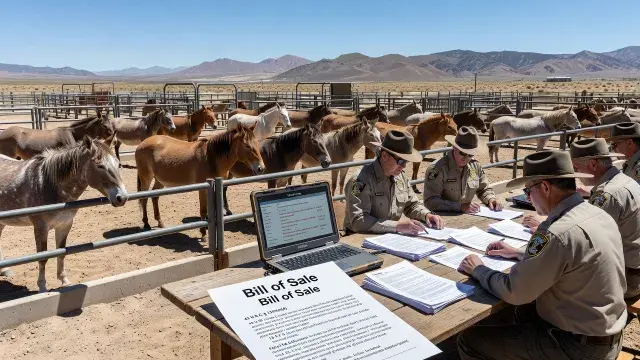
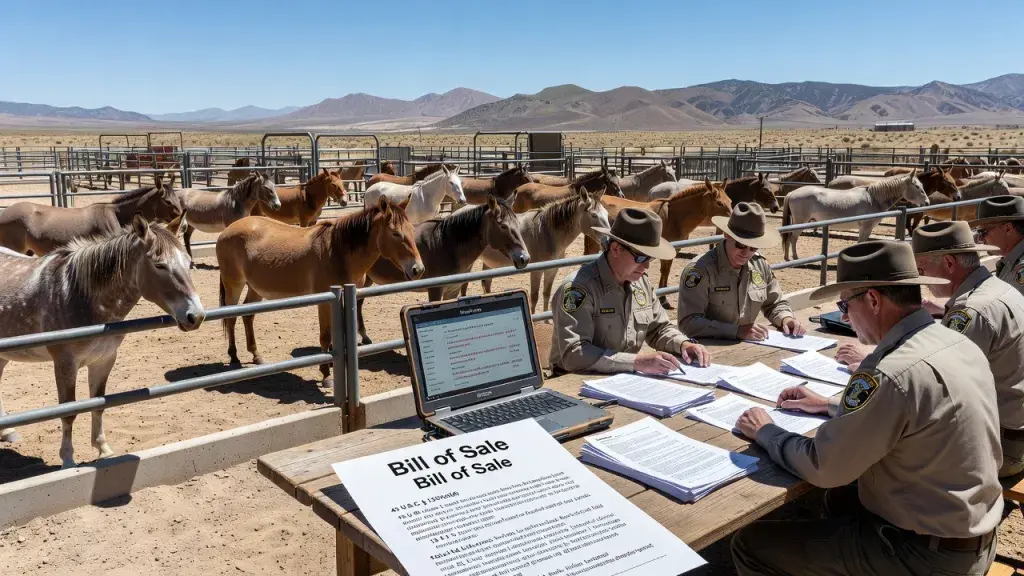
Here's the catch that prompted the update: once an animal is sold, it legally stops being a "wild horse or burro" under 43 U.S.C. § 1333(e)(4), which means it falls outside BLM jurisdiction entirely. That's a very different posture than adoption, where the agency retains oversight for roughly 12 months until title issues. Sold animals are private property from day one, full stop. That gap is exactly where bad actors could, in theory, operate - buying animals legitimately, then routing them toward kill pens or processing intermediaries with little risk of ever being traced back. The revised Bill of Sale now requires purchasers to certify they won't knowingly, recklessly, or negligently transfer an animal toward commercial processing, giving the agency and law enforcement partners cleaner documentation to act on when violations surface.
Screening Buyers Before the Sale, Not After
The more operationally significant shift is internal. The BLM is building a system - ManeFrame - to flag purchasers previously found in violation, making them ineligible for future sales. Staff will check eligibility before approving new applications, and in areas with limited connectivity, printed ineligibility lists will do the job at live events. Field offices also retain authority to cap how many animals one buyer can take at a given event, and how many sold animals can be loaded per trailer, so long as the limit is set before the event starts and applied evenly.
What Hasn't Changed
Basic humane-care requirements remain exactly as they were: adequate feed and water, a secure enclosure, and access to veterinary care, all certified before a sale is approved. The BLM's policy against sending animals to slaughter isn't new - it's been consistent for decades. What's different is enforceability. False certification can expose a buyer to referral under 18 U.S.C. § 1001, covering false statements to the federal government, with prosecution decisions resting with law enforcement and U.S. Attorney's Offices. For the overwhelming majority of buyers who simply want a horse or burro and intend to care for it, little changes. For the narrow slice trying to exploit the program, the paper trail just got considerably harder to avoid.