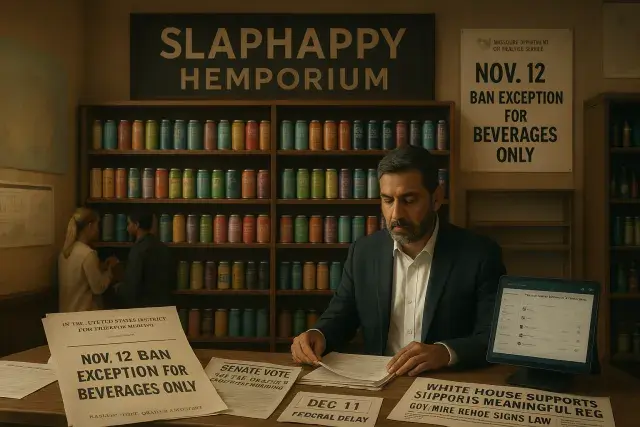
A one-vote-shy effort to strip a 30-day delay from federal hemp restrictions failed in the US Senate on Aug. 8, keeping intact a compromise that pushes the effective date of sweeping new intoxicating-hemp rules from Nov. 12 to Dec. 11. Sen. Ted Budd, R-NC, wanted the original deadline restored, arguing that every extra month on the shelf means another month of intoxicating hemp products marketed in ways that resemble candy and snacks reaching minors. His amendment lost 61-32, but the fight exposed a fracture inside the GOP and put a spending bill's fine print at the center of a national retail-compliance fight that touches convenience stores, gas stations, dispensaries, and hemp-focused retailers alike.
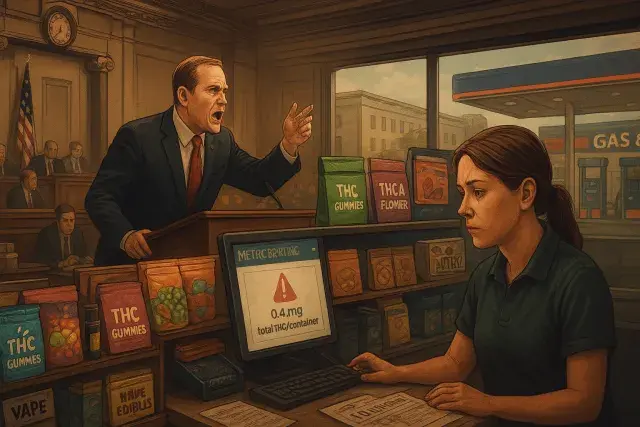
For operators running licensed cannabis storefronts alongside a hemp-derived product line, the stakes are not abstract. Point-of-sale systems, SKU catalogs, and compliant packaging protocols built around the current 0.4-milligram-per-container threshold will need rapid reconfiguration whenever the federal standard actually takes hold - whether that's Nov. 12, Dec. 11, or some later date if Congress moves again. Retailers already juggling METRC reporting, COA verification, and age-gating at checkout now have to plan around a moving compliance deadline, which is its own kind of operational tax. Software vendors serving multi-state and multi-province markets are watching closely; platforms like the Quebec dispensary POS platform illustrate how retail technology providers are already building flexible compliance logic into checkout systems to accommodate shifting THC-threshold rules across jurisdictions, a capability US operators may soon need domestically. Quebec dispensary POS platform
Why the Delay Became a Flashpoint
Section 2019 of the continuing resolution didn't repeal the November 2025 hemp law; it merely bought 30 more days before the new definition - one measured by total THC rather than delta-9 alone - excludes most intoxicating hemp products from the legal hemp category. Budd's coalition, which crossed party lines with 21 Republicans and 11 Democrats voting against tabling his amendment, wanted no delay at all. The opposing coalition, backed by 105 organizations including the US Hemp Roundtable, the National Restaurant Association, and the National Association of Convenience Stores, argued the extra month gives Congress room to write real regulation - good manufacturing practices, import controls on synthetic cannabinoids, packaging standards - rather than a blunt prohibition that wipes out THC beverages, gummies, vapes, and THCA flower overnight.
North Carolina's Parallel Deadlock
The federal standoff has a mirror image at the state level. House Bill 328 would write the same 0.4-milligram threshold directly into North Carolina law, meaning the state ban would survive even if Washington delays or rewrites its version. The Senate passed the conference report 37-6 back on July 2, but the House has left it sitting in the Rules Committee since July 30. Speaker Destin Hall says there's agreement that the current unregulated hemp market can't continue, just not on how to fix it - a familiar problem for any legislature trying to regulate a product category that grew faster than the rulebook.
What Operators Should Watch
Retailers, wholesalers, and brands touching hemp-derived cannabinoids should treat this as a live compliance risk rather than a Washington curiosity. Key pressure points include:
- Inventory exposure: products exceeding 0.4 milligrams of total THC per container may become unsellable overnight once the federal or state threshold takes effect, creating sudden inventory shrinkage on paper and real financial loss in the budroom.
- Packaging and marketing: products styled to resemble snack or candy branding face heightened scrutiny regardless of which deadline survives, since child-safety arguments have bipartisan traction.
- Age verification: HB 328's 21-and-over standard, if enacted, would require retailers to tighten point-of-sale age checks well beyond current hemp retail norms.
- Multiple compliance clocks: operators selling across state lines need systems flexible enough to track different effective dates and thresholds simultaneously.
Neither Congress nor the North Carolina General Assembly has settled the underlying question - prohibition through a strict THC ceiling versus a broader regulatory framework with testing, labeling, and access controls. Until one side wins, retailers are left compliance-planning against a deadline that keeps shifting, which is, in practice, its own form of risk.