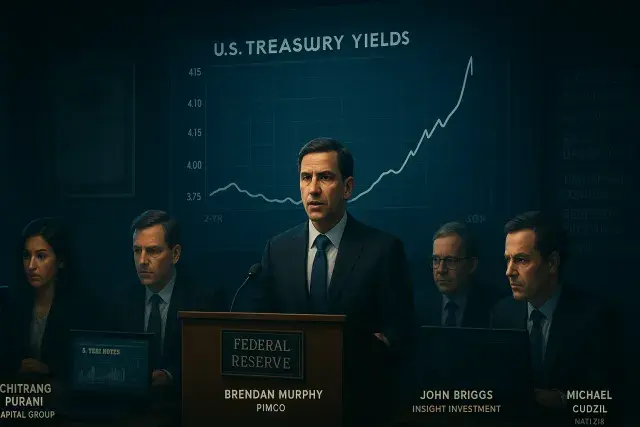
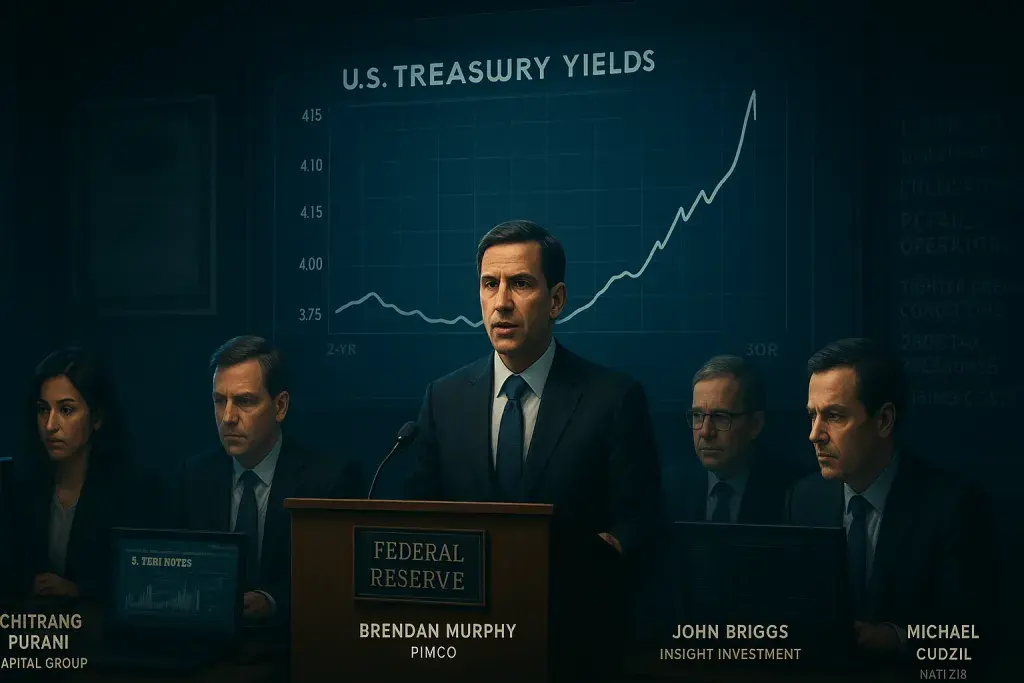
Major fixed-income investors have settled on a clear preference: five-year U.S. Treasury notes. From Capital Group to Pimco, Insight Investment to Natixis, some of the largest bond managers in the world are positioning in the so-called belly of the yield curve, drawn by relative value and the maturity's ability to absorb both hiking and easing cycles within its duration. The consensus has hardened as markets recalibrate under newly installed Fed Chair Kevin Warsh, whose hawkish public stance on price stability has sent yields spiking and forced portfolio managers to rethink duration exposure across the board.
The five-year note currently yields roughly 4.15%, and managers argue it sits at a useful intersection - sensitive enough to reflect near-term Fed signals, but long enough to capture the full arc of a tightening cycle and any eventual pivot. For dispensary operators and cannabis retail businesses watching their own capital costs and banking access, the broader rate environment matters in ways that aren't always obvious. Tighter financial conditions ripple into commercial lending, real estate financing, and the cost of payment infrastructure - all pressure points for licensed cannabis businesses already squeezed by 280E tax exposure and limited banking options. Tools like IndicaOnline POS Illinois reflect an industry increasingly dependent on technology investment at a moment when the cost of that investment is directly tied to the macro rate environment that bond managers are now so carefully mapping.
Why the Belly Attracts When the Outlook Is Unsettled
The appeal of intermediate maturities isn't complicated, but the mechanics are worth spelling out. Two-year notes are tightly tethered to near-term Fed policy expectations - right now, that means volatility, as markets swing between pricing in one hike and pricing in several. Thirty-year bonds carry their own risk: if inflation persists and growth holds, long-duration exposure becomes a liability. The five-year sits between those two exposure profiles.
Chitrang Purani of Capital Group, which manages more than $3 trillion, put it plainly: front-end yields will carry more volatility, making intermediate maturities the more defensible position. The inflation trajectory year-to-date may justify higher rates, he noted, but growth drivers remain uneven and demand-side inflation hasn't taken over as the primary force. That uneven picture - stubborn inflation without a clean demand story - is exactly the environment where a single maturity bet on the short end gets punished most.
Brendan Murphy of Insight Investment, managing roughly $836 billion, described the five-year as a "good pivot point." That framing matters. Markets are simultaneously pricing the possibility of further hikes in late 2026 and the unwinding of those hikes through 2027. A five-year note bought now captures both scenarios in its pricing window - the hikes on the front end, the cuts on the back. John Briggs of Natixis North America made the same point: owning the belly buys time to let potential rate cuts get priced in.
Pimco Diverges From the Market on Hikes
Not everyone agrees hikes are coming. Pimco's base case holds that the Fed won't raise rates because economic growth should slow in the second half of this year - giving policymakers room to stay on hold without triggering an inflation rebound. Michael Cudzil, a senior portfolio manager at the $2.3 trillion firm, is overweight interest-rate exposure and owns both the front end and belly, describing the recent selloff as having only improved the entry point.
His view carries an important caveat: market narratives shift fast. "All it takes is a couple pieces of data to see a bit of a wobble," he said. If upcoming jobs data or next month's inflation prints come in hotter than expected, the case for rate hikes re-enters the conversation hard - and the front end bears the brunt. If data softens, the belly rallies first. Either way, the five-year offers a more forgiving position than either extreme of the curve.
What Rate Volatility Means for Cannabis Business Finance
For the cannabis industry, none of this is abstract. Licensed cannabis operators - dispensaries, multi-state operators, cultivators - operate in a financing environment that is already structurally constrained. Federal illegality limits access to conventional bank lending. Most operators finance equipment, buildouts, and working capital through high-cost private debt, sale-leaseback arrangements, or internally generated cash. When the broader rate environment tightens, those already-expensive private credit facilities get more expensive. Real estate costs - critical for dispensary location strategy and license compliance with zoning setbacks - also move with the rate environment.
The belly-of-the-curve trade reflects something cannabis operators should track directly: the market's best guess at where the economy lands over the next five years. If Pimco is right and growth slows in the second half, that likely means easing credit conditions eventually, which would benefit operators refinancing debt or expanding retail footprints. If Warsh pushes through hikes and the front end spikes, small cannabis retailers with floating-rate obligations feel it first - and the operational budget pressure lands squarely on store-level costs, staffing, and inventory purchasing.
The rate picture isn't the only variable. But it is a variable. And right now, some of the most sophisticated fixed-income managers in the world are betting that the five-year Treasury is the right place to wait it out.