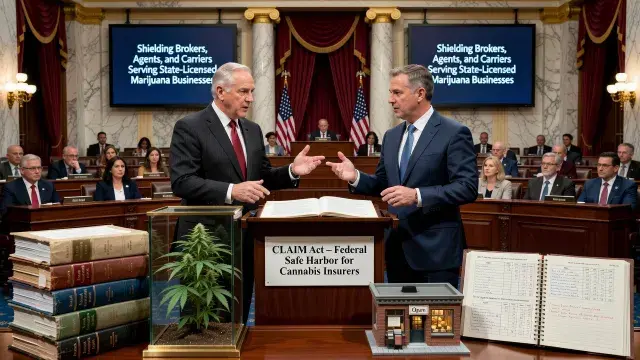
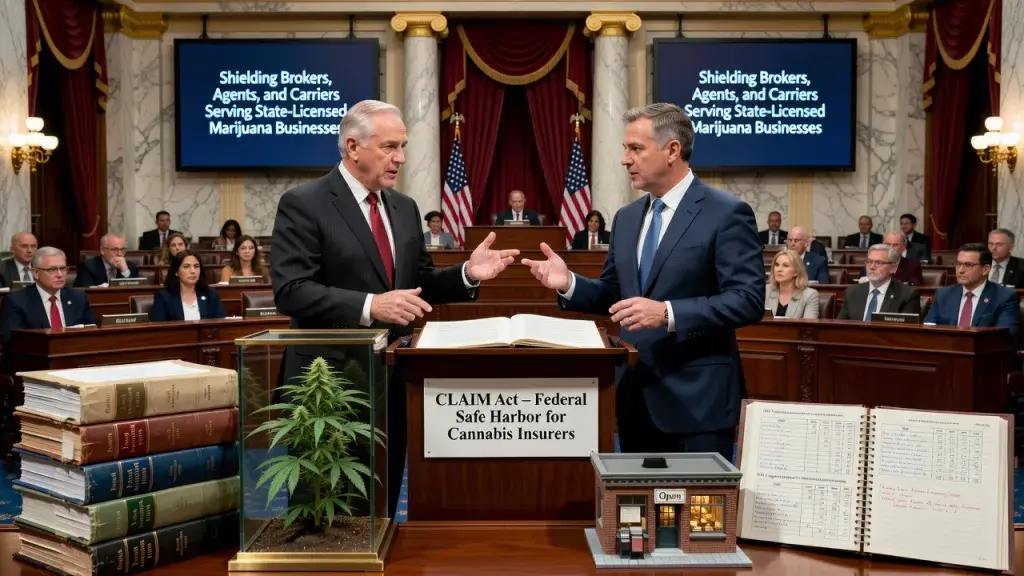
A bipartisan pair of senators has filed legislation aimed at fixing one of the cannabis industry's quieter but costlier problems: the near-total absence of dependable commercial insurance. Sens. Kevin Cramer (R-ND) and Ruben Gallego (D-AZ) introduced the Clarifying Law Around Insurance of Marijuana (CLAIM) Act this week, proposing a federal safe harbor for insurers, brokers and agents who serve state-licensed marijuana businesses. It's the fourth consecutive Congress to see some version of this bill, and the text has changed little each time it comes back around.
Here's the operational reality behind the bill. Because marijuana remains federally illegal under Schedule I, most national insurance carriers steer clear of writing policies for cannabis operators, leaving many dispensaries and cultivators to patch together coverage through a thin surplus-lines market, often at inflated premiums. That gap ripples through daily operations - a store without adequate property or casualty coverage can struggle to secure a commercial lease, finance new equipment, or even qualify for a loan, since lenders routinely require proof of insurance before extending credit. Retailers already juggling seed-to-sale tracking, METRC reporting and tight margins under 280E don't need another compliance headache layered on top; and for operators managing point-of-sale infrastructure in newer medical and adult-use markets, tools like a dispensary point of sale app maryland businesses use to reconcile inventory and tax reporting only work as well as the operational stability behind them, which insurance coverage helps underwrite. dispensary point of sale app maryland
What the CLAIM Act Would Actually Do
The bill would bar federal regulators from penalizing insurance providers simply for covering state-licensed marijuana companies or ancillary businesses that serve the industry. It would also prohibit insurers from canceling or restricting policies solely because a policyholder operates in the cannabis space, and it extends liability protection to employees of insurance companies who handle these accounts. None of this legalizes marijuana or changes its scheduling status; it narrowly addresses the insurance-access problem the same way prior SAFE Banking-style proposals have targeted financial services.
Notably, the legislation also directs the Government Accountability Office to study barriers facing minority-owned and women-owned cannabis businesses in licensing and financial-services access - a nod to the social equity concerns that have dogged state licensing programs since legalization began. Supporters argue that reliable insurance isn't a luxury for cannabis retailers; it's a prerequisite for the kind of risk management that keeps compliant packaging, product recalls, workplace safety and consumer-protection standards intact. A dispensary without adequate coverage is more exposed to inventory shrinkage losses, liability claims and the kind of financial shock that can shutter a small operator overnight.
Part of a Broader Federal Reset
The CLAIM Act lands alongside a related banking-focused bill filed last month and against the backdrop of the DEA's ongoing rescheduling proceeding, where testimony concluded last week and final briefs are due by mid-August. Separately, the Trump administration has already moved state-licensed medical cannabis and FDA-approved marijuana products to Schedule III under a more limited order. None of that resolves the insurance question directly, but it signals a federal posture that's slowly, unevenly, inching toward normalization - while full legalization proposals, including one touted this month by Sen. John Fetterman (D-PA), remain a heavier political lift. For operators, the practical takeaway is this: insurance access, like banking access, is being treated as a fixable technical problem separate from the larger scheduling debate, and that distinction matters for how quickly relief might actually arrive.