California's 2026 legislative session has closed, and three cannabis bills tracked earlier this year are now law. AB 1965, AB 2249, and AB 2532 rewrite the rules on testing, certificates of analysis, packaging, advertising, edible labels, and multi-serving beverages. Some provisions take effect January 1, 2027; others land in July 2027 or January 2028 - but waiting until those dates to act would be a mistake.
Here's the catch: compliance deadlines feel distant until they aren't. Packaging redesigns take months. Supply contracts take time to renegotiate. And old inventory sitting in a warehouse does not disappear just because a new labeling rule arrives on the books.
Testing oversight follows the product to the shelf
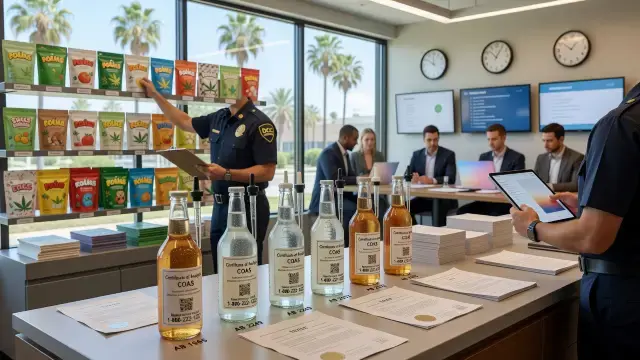
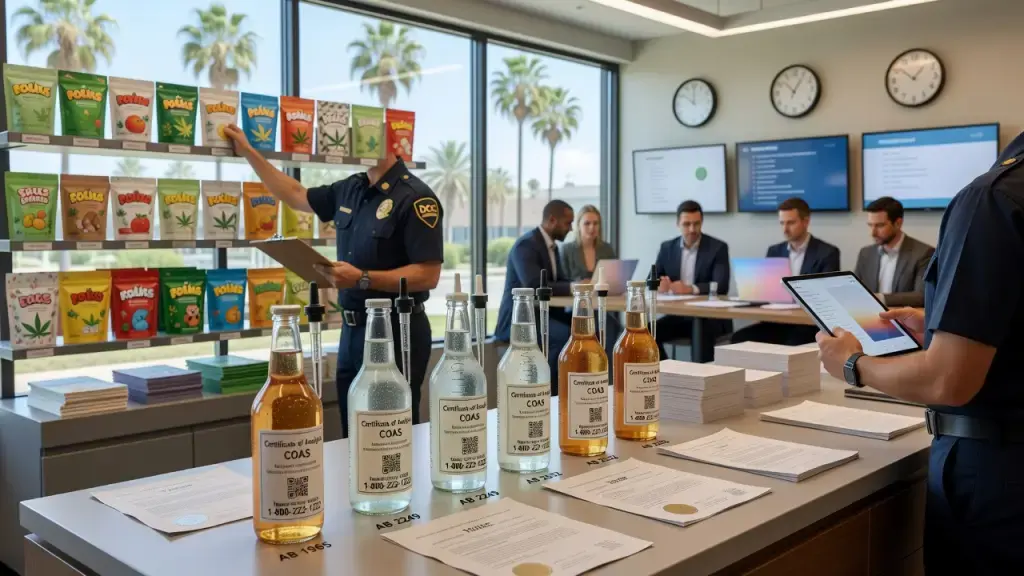
AB 1965 expands the Department of Cannabis Control's authority to test and retest cannabis products after they've already cleared compliance testing and entered retail. Retailers must now allow DCC to pull products for off-the-shelf lab testing, and must provide the certificate of analysis for any product on the shelf when a customer or regulator asks.
That sounds administrative. In practice, it exposes whether a company's recordkeeping actually works. A COA buried in an old email thread or accessible only through a former employee isn't a compliance system - it's a liability waiting to surface. Retailers should be matching every active SKU to its batch-specific certificate, building a uniform digital filing structure, and deciding in advance who responds when DCC or a customer comes asking.
The ripple effects extend into contracts. Manufacturers, distributors, and retailers should be reviewing lab and supply agreements now to settle who controls regulator communications, who pays for retesting or recalls, and whether indemnity language actually covers a mislabeled potency result. A clause that simply promises "compliance with applicable law" won't answer any of that when a conflicting test result shows up.
Youth-appeal packaging rules get teeth in 2028
AB 2249 sharpens California's existing ban on packaging, labeling, and advertising that is "attractive to children." Beginning January 1, 2028, the statute defines that term with specific indicators - cartoon imagery, characters tied to children's entertainment, candy-like branding, bubble lettering, and stylized fruit graphics on edibles and vape cartridges, among others.
The 2028 effective date is not a grace period. Existing DCC regulations already restrict cartoonish and child-oriented packaging, so enforcement pressure doesn't start from zero. What changes is the clarity of the standard regulators will apply.
For brands, the operational risk is inventory. Large print runs reduce unit costs, but packaging ordered in bulk today may be unusable in two years. Companies should be auditing existing artwork now, estimating how long current stock will last, and adjusting print orders - along with agreements with designers and packaging vendors - accordingly.
Multi-serving beverages become a shared compliance chain
AB 2532 adds labeling requirements for edibles and beverages, with the heaviest changes aimed at multi-serving drinks. Starting January 1, 2027, labels must carry the national Poison Help line number. By July 1, 2027, multi-serving beverages must clearly disclose serving size in fluid ounces, include measurement guidance, and - where containers are transparent - display visible serving lines. Retailers must offer customers a manufacturer-provided measuring device at no charge, and marketing may not present a multi-serving product as a single serving.
- Manufacturers must produce compliant labels, containers, and measuring devices
- Distributors must confirm compliant products and materials move together through the supply chain
- Retailers must stock and actually offer measuring devices at the point of sale
- Marketing teams must audit both packaging and online menus for consistency
That division of labor is where things tend to slip. A distributor might receive measuring devices but never confirm they reached the retail counter. An online product listing might still describe a multi-serving bottle as a single pour. Each licensee in the chain needs to map its own piece of the process and assign clear ownership - not assume someone else is handling it.
The runway is longer than it looks - until it isn't
AB 1965 turns testing into an ongoing retail-level exposure, not a one-time hurdle cleared before a product ships. AB 2249 forces a harder look at branding choices many companies adopted years ago without much scrutiny. AB 2532 spreads beverage-labeling responsibility across manufacturers, distributors, and retailers alike, with no single party fully in control of the outcome.
Operators who start reviewing contracts, auditing packaging, and training staff now will have room to make adjustments on their own terms. Those who wait will be managing the same problem California cannabis businesses have faced before: a compliance deadline that looked distant right up until it wasn't.