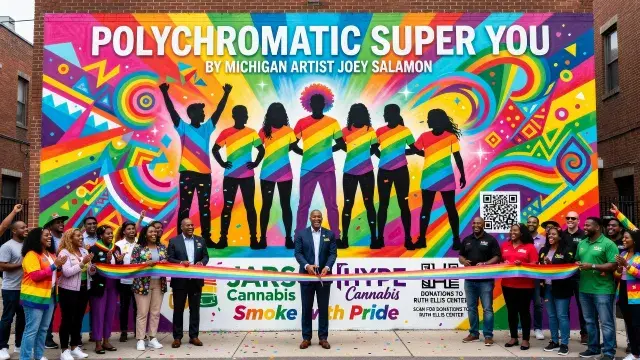
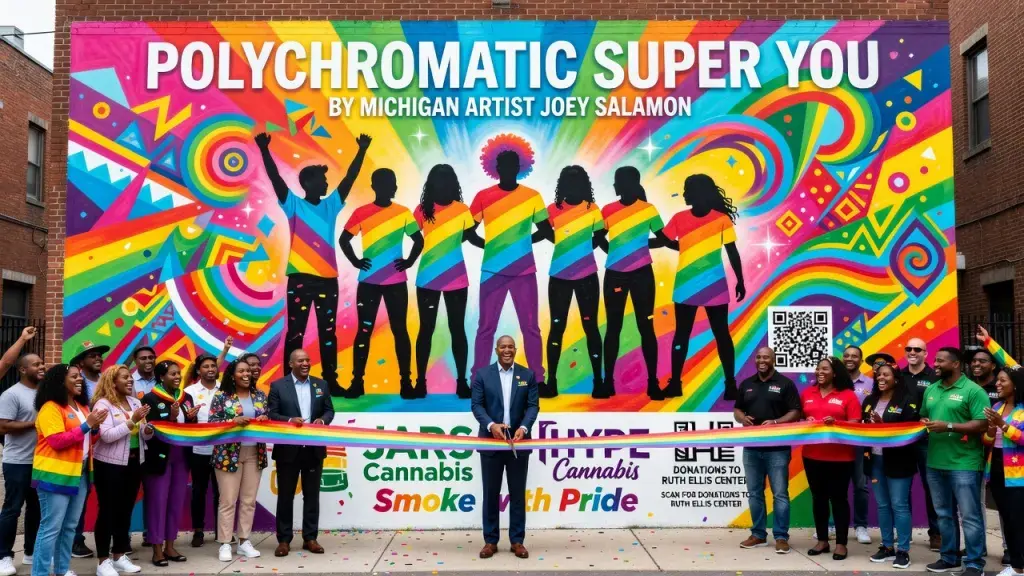
Two cannabis retailers just put their marketing dollars behind a public art project with a cause attached, and the move says something about how dispensary brands are trying to build community goodwill in a crowded market. JARS Cannabis and HYPE Cannabis held a ribbon-cutting in downtown Ferndale, Michigan, to unveil "Polychromatic Super You," a 40-by-25-foot mural by Michigan artist Joey Salamon, located in the alley at 258 W. Nine Mile Rd.
The mural isn't just decorative. It's tied directly to the companies' Smoke with Pride campaign, which channels 10 percent of proceeds from HYPE products sold at JARS locations, plus 100 percent of proceeds from a co-branded Smoke with Pride Kit, to Detroit's Ruth Ellis Center, a support services organization for at-risk LGBTQ+ youth. For operators watching how brand partnerships translate into retail traffic and consumer trust, this is a case study in cause marketing done through SKU-level allocation rather than a blanket donation pledge. Back-office execution matters here - tracking which product lines qualify for the giveback requires clean inventory categorization, something dispensaries increasingly manage through point-of-sale and seed-to-sale platforms; operators researching how comparable markets structure these back-end systems can look at how providers like marijuana dispensary software maryland handle SKU-level promotions and compliance reporting for licensed retailers. marijuana dispensary software maryland
Why Brand-Funded Public Art Matters for Retail Compliance
Cannabis advertising rules vary sharply by state and municipality, and murals occupy a gray zone that operators should watch closely. Public art commissioned by a licensed retailer can function as brand marketing even without a logo splashed across it, which means local sign ordinances, cannabis-specific advertising restrictions, and zoning approval for alley or building-facing installations all come into play. Ferndale's willingness to host this piece suggests local officials viewed it as a community art contribution rather than a promotional billboard - a distinction that matters for any retailer considering similar sponsorships elsewhere. Not every jurisdiction will draw that line the same way.
The QR Code Layer: Compliance and Consumer Access
A QR code affixed to the mural routes visitors to information about the Smoke with Pride initiative and a direct donation channel for the Ruth Ellis Center. That's a sensible way to separate the art from any product promotion - the code links to a cause, not a menu or a discount code. For dispensary marketing teams, this is a useful template: philanthropic messaging can live in public space without triggering the same regulatory scrutiny that product advertising would face, provided the call to action stays focused on donation and awareness rather than purchase.
What Operators Should Take From This
- Cause-tied promotions require clean SKU tracking so accounting and compliance teams can verify accurate donation percentages.
- Public art commissioned by a licensed cannabis brand may still fall under local advertising or signage review, even without explicit product branding.
- Community partnerships with nonprofits can build goodwill, but proceeds allocations should be documented and auditable, particularly given the tax complexities cannabis retailers already face under federal 280E restrictions.
- QR-code donation links offer a low-risk way to extend a campaign's reach without crossing into promotional advertising for cannabis products themselves.
The mural itself makes no claims about cannabis products, potency, or effects - it's a community piece with a philanthropic backbone. That's worth noting for any retailer weighing similar sponsorships: the strongest goodwill campaigns keep the product and the cause clearly separated, letting the business support a community need without blurring into advertising that regulators might flag.