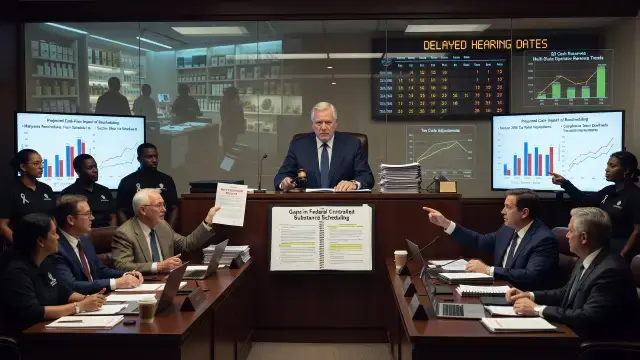
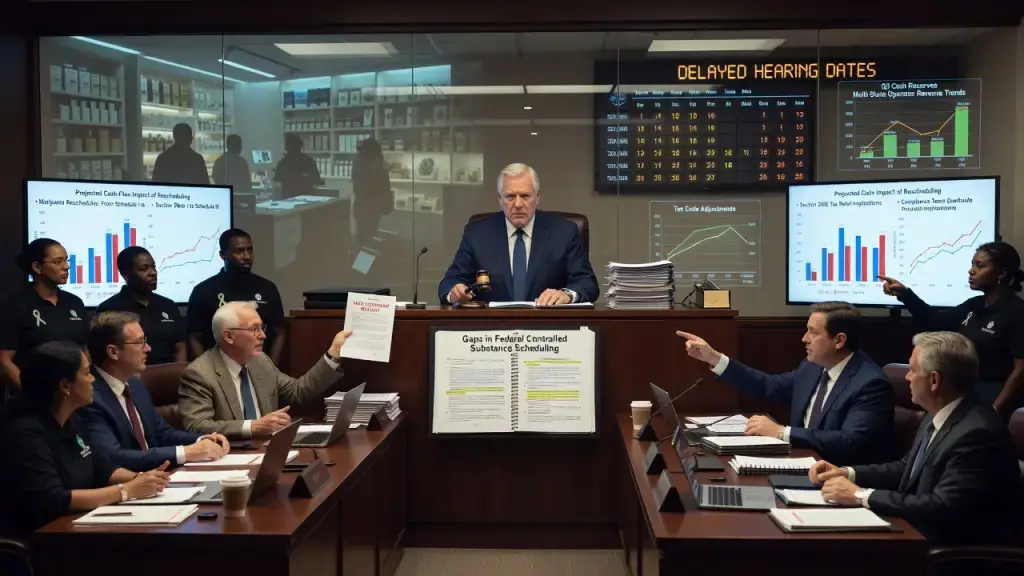
The marijuana rescheduling proceeding that multi-state operators and investors have been tracking for more than a year just got another procedural wrinkle. DEA Chief Administrative Law Judge Derek Julius has ordered the agency to respond by October 21 to a motion from rescheduling opponents seeking fresh testimony and discovery, keeping the case stayed in the meantime. For an industry that has spent months bracing for a Schedule III determination, this is one more reminder that the finish line keeps moving.
What's Actually in Dispute
The fight centers on a Government Accountability Office report that flagged "gaps" in how federal agencies evaluate and schedule controlled substances - including the finding that DEA lacks documented policies for conducting scheduling evaluations, and that FDA similarly lacks written procedures for developing scheduling recommendations. DEA doesn't object to entering the report into the hearing record. What it opposes is opening a new round of briefing on what the report means. Opponents - NDASA, DUID Victim Voices, Dr. Kenneth Finn, SAM, and the states of Idaho, Indiana and Nebraska - argue the report isn't just background noise; they say it exposes an unexplained shift from the old five-factor medical-use test to a newer two-part version, and that this shift undermines the government's Schedule III case. DEA's position, in plain terms: the report documents paperwork gaps, not flaws in the underlying analysis.
Why Operators Should Care About a Procedural Fight
It's tempting for dispensary owners and compliance teams to tune out a dispute over discovery motions and administrative record-keeping. That would be a mistake. Every stay, every extended briefing schedule, pushes back the point at which Schedule III - if it happens - actually changes anything on the ground. Schedule III status would not legalize adult-use retail or eliminate state licensing structures, but it would reshape the federal tax exposure that has squeezed margins across the industry for years. Section 280E of the Internal Revenue Code currently bars businesses trafficking in Schedule I or Schedule II substances from deducting ordinary business expenses, a rule that has inflated effective tax rates for plant-touching companies well beyond what comparable retailers pay. Moving marijuana to Schedule III would open the door to those deductions. Multi-state operators have already built financial projections around that possibility; every additional month of litigation delays the cash-flow relief those projections assume.
The Mechanics of the Delay
Opponents aren't just asking to include a document in the record - they're asking Julius to reopen the hearing for "narrowly tailored" discovery requests and limited testimony tied to the agency-process gaps the GAO identified. DEA, notably, has pushed back against that broader request even while conceding the report itself can come in. The judge hasn't ruled on either question yet; he's reserved judgment pending more filings, which is itself the point - this case keeps generating new motions rather than closing out. For operators watching for a recommendation to go to the DEA Administrator, the practical takeaway is that the hearing's procedural runway has lengthened again, with no firm date for when Julius will actually rule on the GAO report's admissibility, let alone whether discovery reopens.
What Comes Next
DEA's October 21 response will likely shape whether this proceeding stays confined to paper briefing or expands into a fresh evidentiary phase. Worth remembering: DEA itself, in its final brief, already asked Julius to "expeditiously recommend" the Schedule III move, citing HHS's ten-month scientific review and pointing to the tens of thousands of practitioners currently treating patients under state medical cannabis programs as evidence against a continued Schedule I classification. Opponents remain focused on procedural irregularities and public-health risk arguments. Until Julius rules, compliance teams, tax advisors and finance departments across the industry are left in the same holding pattern they've occupied for months - planning for a rescheduling outcome that keeps getting pushed further down the calendar.