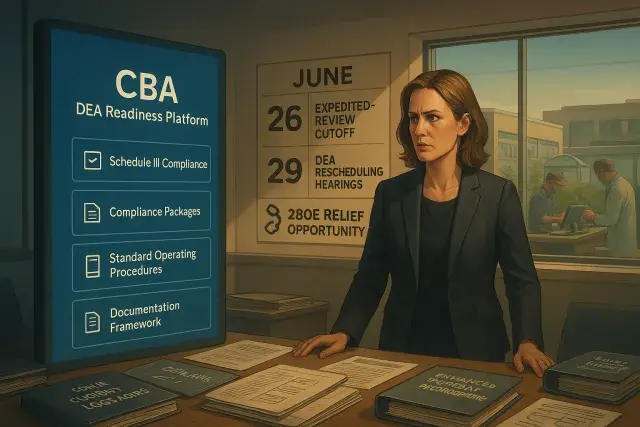
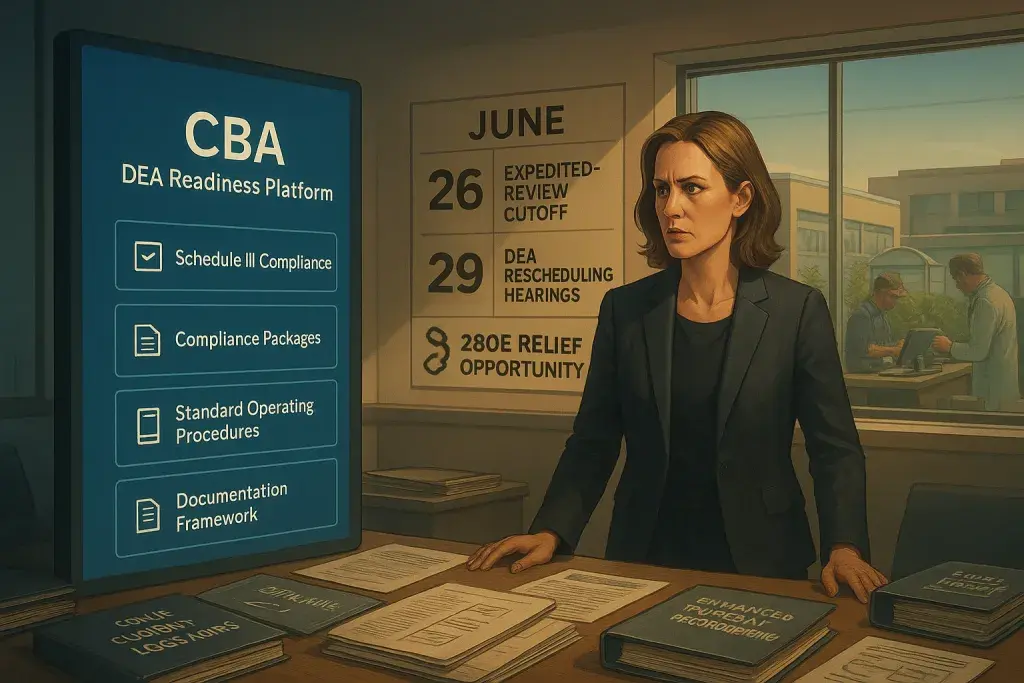
The window for medical cannabis operators to secure early federal standing is closing fast. With the Department of Justice's registration portal now open and a June 26 deadline for expedited-review eligibility ahead of the June 29 federal rescheduling hearings, operators who haven't built federal-grade compliance infrastructure are running out of time to get there. Into that gap, Phoenix-based The Cannabis Business Advisors (CBA) has launched a DEA Readiness Platform - a digital storefront delivering downloadable compliance packages, standard operating procedures, and documentation frameworks built specifically for the Schedule III transition.
The urgency here isn't manufactured. State-licensed cannabis businesses have operated for years under compliance regimes shaped by state agencies with, as CBA CEO Sara Gullickson puts it, limited audit manpower and constrained budgets. The practical result: operational recordkeeping that might satisfy a state inspector could fall well short of what a DEA audit demands. That gap is real, and it's been hiding in plain sight across markets. Operators in states like Oregon who have invested in robust back-office systems - including purpose-built tools like a marijuana pos oregon platform - already understand that clean, retrievable transaction data isn't optional when regulators come looking. Federal scrutiny operates at a different altitude than most state inspections, and SOPs that were adequate for a quarterly state review may not hold up under the kind of chain-of-custody examination a controlled-substance registrant would face.
Gullickson, whose background includes a 2018 exit from a cannabis IP and compliance documentation company, framed the DOJ registration deadline as a separating moment: operators who file early with complete documentation earn access to federal safe-harbor protections; those who arrive empty-handed do not. The CBA platform is built around that specific need - not general business consulting, but the documentation layer that an operator would need to demonstrate to federal regulators that they can manage a Schedule III controlled substance responsibly. That includes diversion prevention protocols, dual-market inventory separation workflows for facilities holding both medical and adult-use licenses, and enhanced recordkeeping models designed for federal retention standards.
Why State Compliance Records Aren't Enough
This is the part many operators are getting wrong. A state cannabis license proves that a business met the threshold requirements at the time of licensure. It does not prove that the operation has maintained federal-level documentation continuously - and the DEA will want to see exactly that. Chain-of-custody tracking, inventory reconciliation, and diversion prevention are already required under state seed-to-sale mandates in most markets, but the depth and retrievability of those records vary widely. Markets like Oklahoma are tightening operational scrutiny now, and California has moved to formally separate medical and adult-use workflows for dual-licensed facilities - a structural requirement that many operators haven't fully operationalized in their back-end systems.
The dual-license issue deserves particular attention. A dispensary holding both a medical and adult-use license - common in states that allow vertical integration across license types - faces a specific federal compliance challenge under rescheduling: medical cannabis products, if Schedule III takes effect, would carry controlled-substance designations that adult-use products do not. Commingling inventory records, even accidentally, creates serious liability exposure. Clean workflow separation isn't just a regulatory preference at that point; it's a legal necessity.
The 280E Factor and What It Means for Operator Economics
Beyond the immediate compliance question, there's a business-case dimension that operators and their investors should not overlook. IRS Section 280E has been one of the most punishing structural features of the cannabis tax environment for years - disallowing standard business deductions for companies trafficking in Schedule I or II controlled substances, which has pushed effective tax rates for cannabis businesses well above what comparable retailers face. Schedule III rescheduling, if it holds, would remove cannabis from the 280E universe. That potential shift could materially improve cash flow and affect enterprise valuation in ways that matter to investors and acquirers. Early federal registration positions an operator to move quickly if and when that relief becomes concrete.
To put it plainly: the operators who have their compliance documentation in order before the hearings are the ones who can act on that economic opportunity immediately. Those who scramble after the fact will spend time and capital catching up while the early movers are already in conversations with capital partners about what a post-280E balance sheet looks like.
What Operators Should Do Right Now
The June 26 deadline for expedited review is not the last opportunity to register - but it is the deadline that comes with accelerated processing and early access to safe-harbor protections. Missing it doesn't close the door permanently, but it does change the risk profile for the filing period between now and the June 29 hearings.
Practically speaking, operators should be doing three things in parallel: filing through the DOJ portal before the June 26 cutoff; auditing their existing SOPs against federal controlled-substance standards; and resolving any dual-license workflow gaps that could create inventory commingling problems. CBA's platform is one resource for the documentation layer; operators with existing compliance counsel should loop them in immediately. The compliance infrastructure matters more than the platform it comes from. What matters is that the records are complete, retrievable, and built to a federal standard - because that is precisely what an examiner will be looking for.