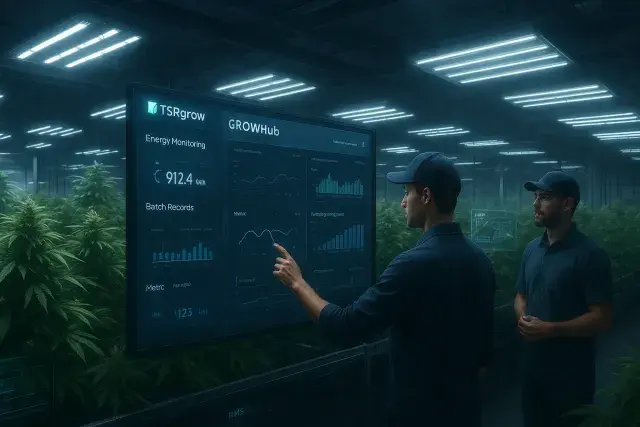
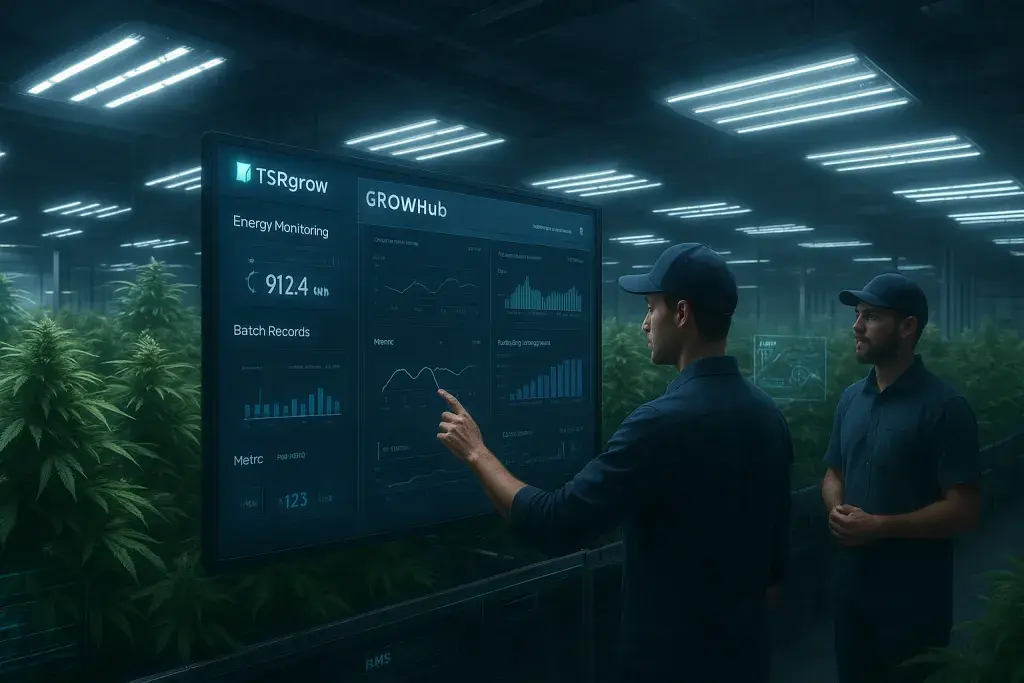
TSRgrow has rolled out a significant expansion of GROWHub, the software layer behind its LED lighting and Remote Power systems, adding energy monitoring, expanded batch-record tools, Metrc integration and Building Management System connectivity for commercial cultivators. The update, announced for 2026, folds cultivation controls, compliance workflows and facility data into a single connected system rather than the patchwork of spreadsheets and standalone platforms many grow operations still rely on. For an industry under mounting pressure to document every stage of production, that consolidation is not a minor convenience - it changes how operators can defend their records when regulators come calling.
Cultivation has always generated data, but most of it has lived in silos: one system for lighting, another for environmental sensors, a spreadsheet for batch notes, and a separate compliance platform for track-and-trace reporting. That fragmentation creates real operational risk. Missing or inconsistent records during a Metrc audit can trigger corrective action plans or worse, and cultivators without a clean paper trail often struggle to explain yield variance or quality drift between harvests. The same discipline retailers apply through a compliant cannabis POS in New Jersey - where every sale, discount and inventory adjustment has to reconcile against state tracking systems - is now extending upstream to the cultivation side of the supply chain, where growers face comparable scrutiny over what happened long before a product reaches a dispensary shelf. compliant cannabis POS in New Jersey
Why compliance and cultivation data are converging
Regulators have steadily raised the bar on traceability, and that trend shows no sign of reversing. Track-and-trace systems like Metrc were built to follow product from seed to sale, but the cultivation side of that chain has historically been the weakest link - dependent on manual logs, disconnected sensors and whatever a grower happened to jot down during a shift change. GROWHub's expanded batch-record functionality addresses that gap directly, organizing lighting recipes, environmental conditions and operational settings around individual crop cycles so operators can reconstruct exactly what happened to a given batch, not just where it moved afterward. That matters more as federal rescheduling discussions continue, since any shift in oversight is likely to bring closer alignment with documentation standards seen in more established regulated industries.
Energy data as a business and facility issue
Lighting is typically among the largest line items in a cultivation facility's utility bill, and GROWHub's direct tie to TSRgrow's Remote Power infrastructure lets operators view energy consumption alongside cultivation and environmental data rather than as a separate utility statement reviewed weeks later. Layered with BMS connectivity, that visibility lets facility managers correlate production schedules and lighting strategies with real operating costs - information that matters for margin-strapped cultivators already contending with 280E tax treatment and compressed wholesale pricing.
What it means for operators
The practical value for multi-state operators and single-site cultivators alike comes down to repeatability. Centralized analytics that let growers compare cycles, spot trends and correlate cultivation decisions with yield and quality outcomes turn institutional knowledge that once lived in one cultivator's head into an actual historical record. That's useful for training new staff, defending recipes to investors, and, not incidentally, standing up to regulatory review with something more substantial than a shrug and a filing cabinet.