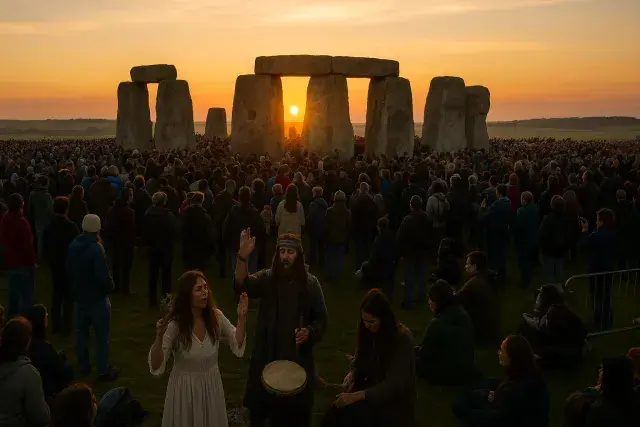
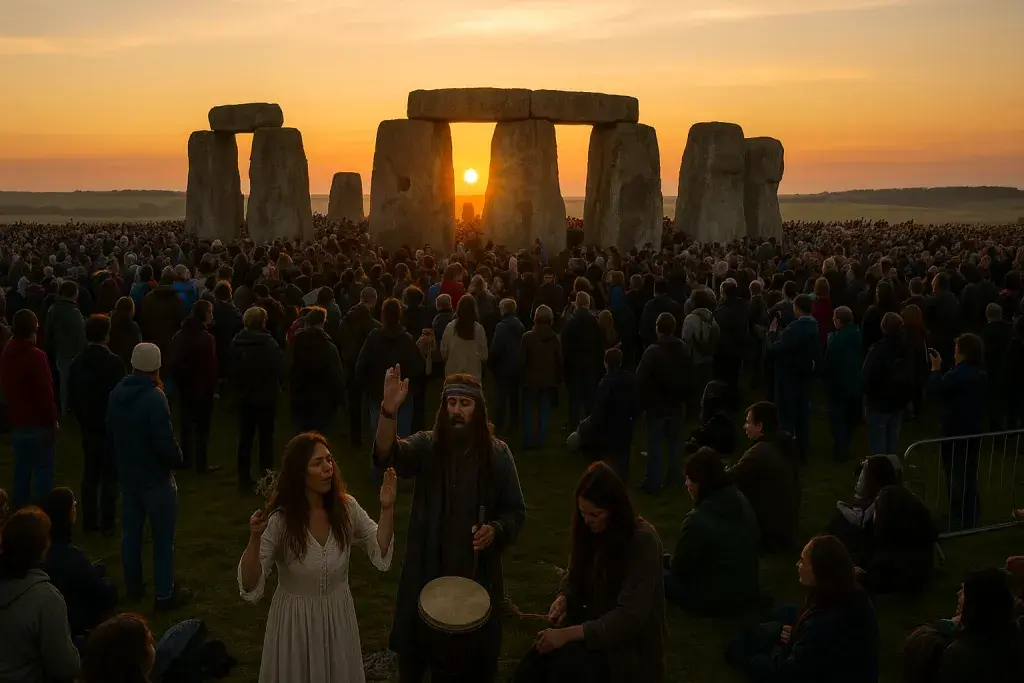
More than 20,000 people gathered at Stonehenge in Wiltshire, England, on Sunday to mark the summer solstice - the longest day of the year - watching the rising sun align with the megalithic monument's central axis just after 5 a.m. local time. The event, managed by Historic England's National Heritage arm, has grown steadily into one of the United Kingdom's most attended seasonal gatherings. That scale brings with it questions about crowd logistics, site preservation, and how public institutions balance open access against long-term conservation of a UNESCO World Heritage Site.
The operational reality of managing tens of thousands of visitors at a 5,000-year-old structure is not simple. Organizers must coordinate entry flows, sanitation, emergency access, and post-event site condition assessments - challenges that parallel, in some ways, the compliance and capacity management pressures facing large-scale licensed retail environments in regulated industries. Consider how a high-traffic retail operation in a state like Maine must balance customer throughput, regulatory reporting, and safety protocols simultaneously; a well-configured dispensary pos maine system, for instance, is built precisely to handle those operational demands without letting compliance slip under volume pressure. The parallels between heritage site crowd management and high-stakes retail operations are more instructive than they might first appear.
Stonehenge's construction spanned roughly 1,500 years, beginning around 3000 B.C. during the Neolithic period and continuing into the Bronze Age. The monument visible today corresponds to its third construction phase, between approximately 2600 and 1600 B.C., when the large sarsen stones that define its silhouette were erected. Archaeologists believe the site's alignment with both summer and winter solstices points to its use in seasonal ritual - possibly tied to agricultural cycles, communal ceremony, or beliefs about death and continuity. Recent research has also identified what appears to be a predecessor structure roughly five kilometers away, predating Stonehenge by about 500 years and similarly aligned with solar events, suggesting the human impulse to mark time and gather around fixed, monumental points runs deep.
What Large Gatherings at Heritage Sites Actually Cost
Free public access to Stonehenge during solstice events is a deliberate policy choice by Historic England - one that prioritizes cultural participation over revenue at specific moments. That sounds generous, and it is. Here's the catch: open-access events at sites with strict preservation mandates require significant advance investment in temporary infrastructure, security staffing, and post-event remediation. The site's turf, the stone perimeter, and visitor pathways all absorb wear that has to be assessed and addressed after each gathering. None of that is cost-free.
For event and site managers, the solstice gathering functions less like a festival and more like a recurring operational audit. Entry timing, crowd distribution across the monument's concentric stone rings, and the management of informal rituals - percussion circles, small group ceremonies, individual reflection - all require a level of real-time coordination that is invisible to most attendees. What's striking is how attendees describe the experience in terms of community and shared focus rather than spectacle. "Everyone concentrated on the same thing," one Bristol-area attendee told EFE news agency. That convergence of individual intent around a single fixed point - the Heel Stone, through which the sun rises - is precisely what makes the event manageable. People come with purpose, not chaos.
Preservation Pressure and the Limits of Access
UNESCO World Heritage designation, which Stonehenge received in 1986, carries obligations that go beyond tourism promotion. Site managers must demonstrate ongoing preservation efforts, limit activities that could cause physical damage, and report on the condition of the monument. Open solstice access exists within that framework - not outside it. The tension between public engagement and long-term conservation is real, and it gets more complex as attendance grows.
Recent archaeological findings have added another layer of consideration. The identification of a possible wooden predecessor structure - similarly aligned with solstice sunrises and sunsets - suggests the landscape around Stonehenge holds more undocumented significance than previously understood. That means ground disturbance, even from foot traffic during large events, carries archaeological risk beyond what's immediately visible. Site managers are effectively operating in a compliance environment where the rules extend below the surface - literally.
Community, Ritual, and the Business of Public Heritage
For the people who attended Sunday's solstice, the draw was a mix of history, community, and personal reflection. Some came as first-timers; others return annually. Attendees described watching shamans perform cleansing rituals near the megaliths, gathering around drum circles in the pre-dawn darkness, and using the moment as a personal checkpoint - a way of measuring the year's progress. To put it plainly: Stonehenge at solstice functions as a shared public ritual that doesn't belong to any single tradition, faith, or demographic.
That breadth of participation is part of what makes the event both manageable and complicated for organizers. There is no single ticket holder, no defined program, and no clear liability chain for informal rituals that emerge spontaneously within the monument's perimeter. National Heritage has to accommodate that reality while keeping the site intact and the public safe. It is, in its own way, a model for how public institutions manage open access to irreplaceable assets under conditions they cannot fully script in advance.